Sweden
Designed in Stockholm, assembled in Germany, and priced well under the brands it borrows from. Vintage-leaning chronographs, dive watches and GMTs with a skate-and-heavy-metal streak.
On the wrist
The brand
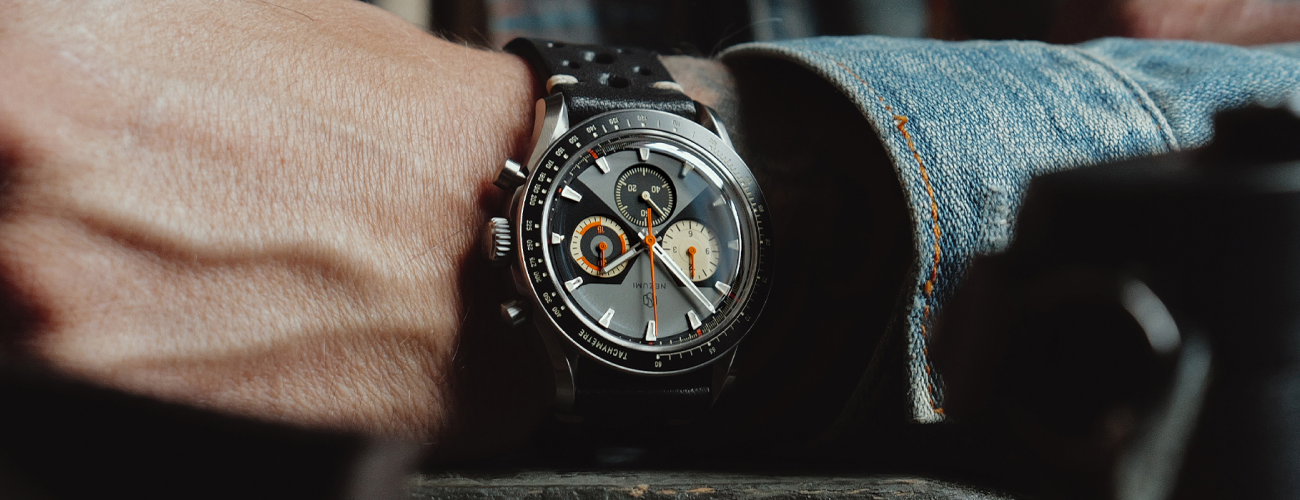
Nezumi was founded in 2011 by David Campo, who is of Spanish and Swedish heritage, spent most of his youth in the United States and later settled in Stockholm. It started as a side project making denim and leather goods. The move to watches came in 2015 with the Voiture, a vintage racing chronograph that found its audience on Kickstarter and still anchors the catalogue today.
The name comes from Nezumi Kozō, the Japanese folk figure known for outsmarting the authorities and passing wealth on to people who needed it. It is a fitting story for a brand whose whole pitch is sensible pricing. Nezumi sells direct, skips the retail markup, and puts the savings into sapphire, solid cases and proper finishing.
The design language is where the personality shows. Campo cites the skateboarding, heavy metal and fashion of 1980s and 1990s America as influences, alongside classic cars and music. You can see it in the colour choices and the slightly rebellious dial layouts, which sit on top of case shapes borrowed from classic motorsport and military watches.
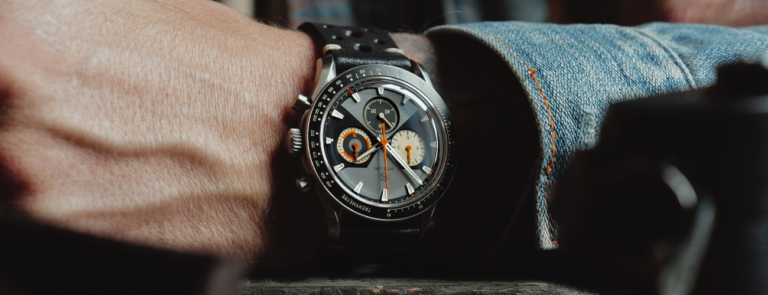
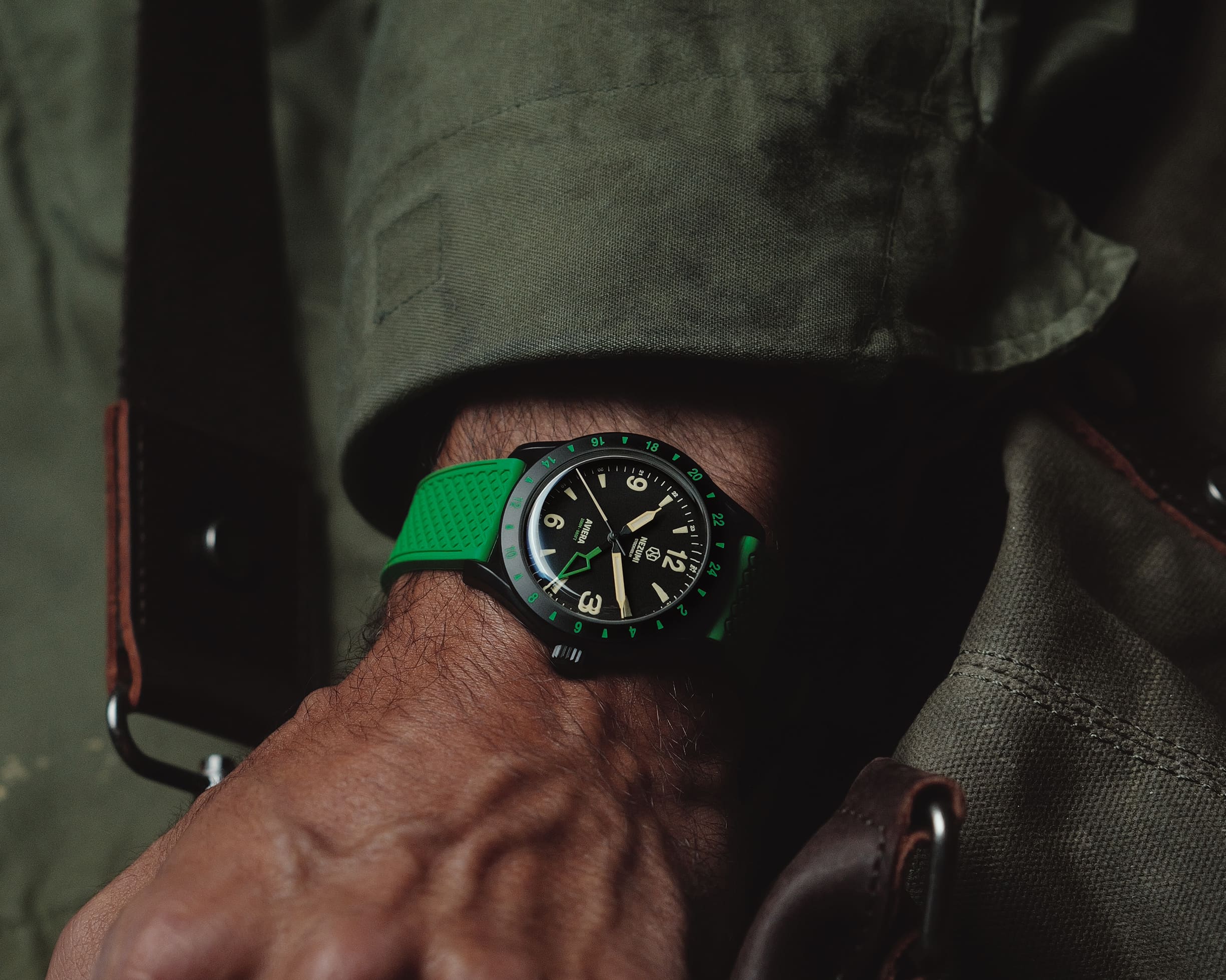
The catalogue is broader than most brands at this size. The Voiture, Corbeau and Tonnerre are chronographs, the Baleine is a 200m diver, the Aviera is a GMT and the Terrain is a field watch. The chronographs mostly run on the Seiko VK63 meca-quartz, which gives you the snap of a mechanical chronograph with the accuracy and low running cost of quartz. The automatics use Miyota, with the 9039 in the Baleine and the true GMT 9075 in the Aviera.
Every watch is designed and engineered in Stockholm and then assembled, quality controlled and tested in Germany. Several references run as limited or seasonal editions, the Aviera AA3.133 among them at 300 pieces, so popular colourways can sell out and stay gone.
You want a vintage-flavoured chronograph or a genuine GMT without spending four figures, you like a watch with some attitude in the colour and dial design, and you would rather buy direct from a small brand than pay for a big name. The Corbeau and Voiture are among the most characterful meca-quartz chronographs at this price, and the Aviera is one of the cheaper ways into a proper flyer-style GMT.
If you like Nezumi Studios
People also ask
Nezumi is a Swedish brand based in Stockholm. Every watch is designed and engineered in Sweden, then assembled, quality controlled and tested in Germany. The movements are Japanese, from Miyota and Seiko.
Roughly €370 to €810. The meca-quartz Corbeau opens the range at around €373 excluding VAT on a strap. The automatic Aviera GMT sits at the top, with the seasonal AA3.133 listed at €760 as a two-strap bundle.
Mostly Japanese. The Voiture, Corbeau and Tonnerre chronographs use the Seiko VK63 meca-quartz. The Baleine diver uses the automatic Miyota 9039 and the Aviera uses the Miyota 9075, a true flyer GMT with 42 hours of power reserve. The tenth anniversary Voiture used a Swiss Sellita SW510 manual-wind chronograph.
For the money, yes. You get sapphire crystals, 316L steel cases, screw-down crowns on the divers and GMTs, and assembly in Germany, at prices most brands reserve for mineral glass and printed dials. The trade-off is that the movements are workhorse Japanese calibres rather than anything finished or Swiss, which is exactly what keeps the prices where they are.
It is inspired by Nezumi Kozō, the name used for Nakamura Jirokichi, a figure from Japanese folklore known for outsmarting authority and redistributing wealth to those in need. The brand uses the story as a nod to its direct-to-consumer pricing.