
Christopher Ward The Twelve Xander x The Dial Artist Review
- Dan H.
- July 20, 2026
The Dial Artist’s Territory
Every so often a collaboration lands that reads less like a product launch and more like an actual studio residency. The kind where an artist gets handed the keys to something a brand has spent years engineering, and where the deliverable is not a printed dial variant but a piece of work you can genuinely trace back to individual brush strokes. The new Christopher Ward The Twelve Xander x The Dial Artist is exactly that kind of release, and the maths behind it (150 pieces, 1,300 hand-painted movement components, 900 hours of studio work) is the kind of maths that makes you re-read the press release just to make sure you got the numbers right.
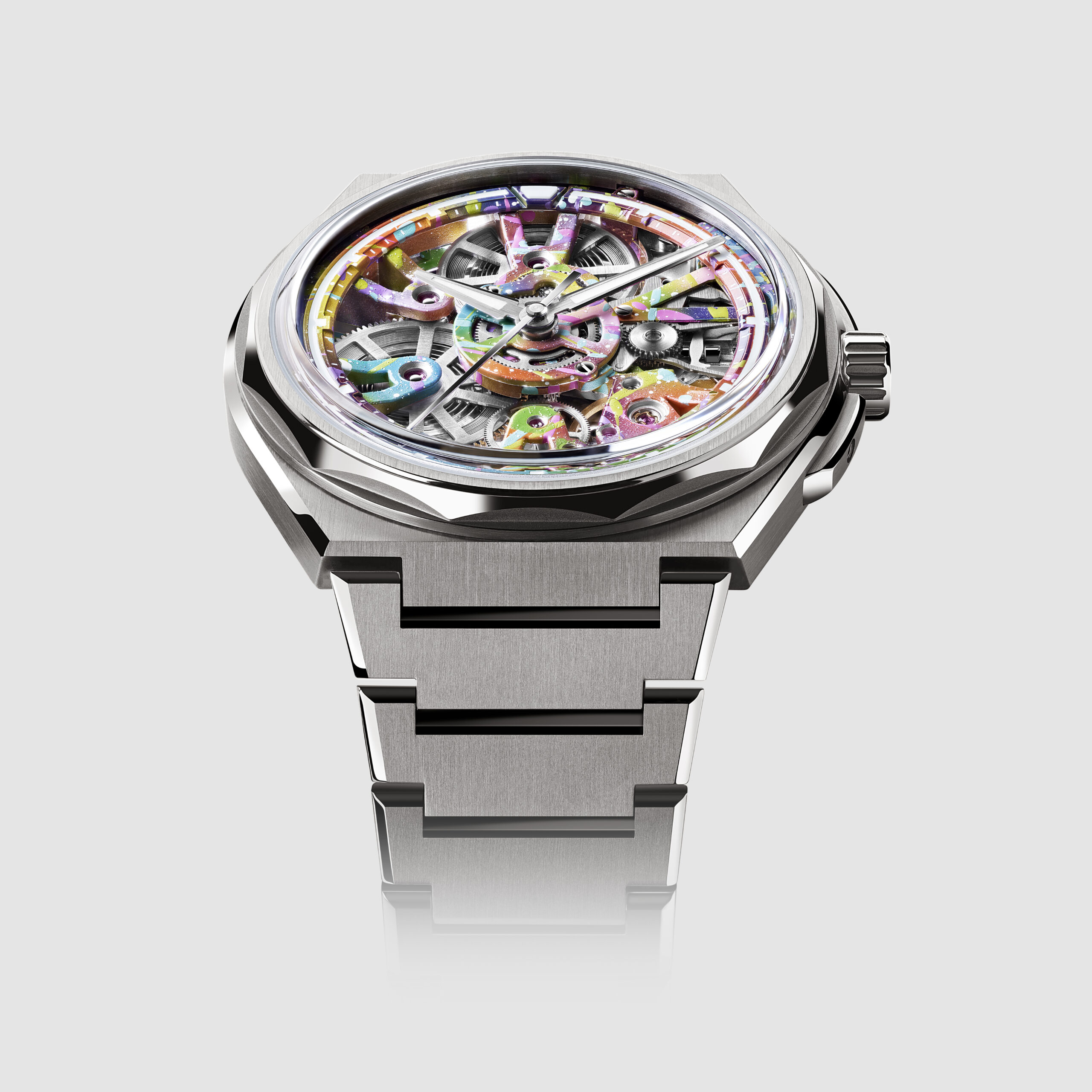
Christopher Ward have been quietly having one of the most interesting years of any British brand at the accessible-luxury end of the market, largely on the strength of the CW-001 in-house calibre. The Twelve is the platform that houses it. This particular collaboration extends that platform in a direction almost no in-house movement brand has been willing to go: hand painting an artist's work directly onto the visible bridges and components of the calibre itself, on both sides of the case, and then shipping every single piece as genuinely unique due to the natural variation of the process. Chris Alexander, better known as The Dial Artist, spent 50 days in his Perth studio in Scotland to make it happen.
The Twelve Xander x The Dial Artist launches with a launch event at Christopher Ward's Chicago showroom on Thursday July 9 2026, followed by public release at 3 PM BST on Friday July 10 via the Christopher Ward website. Chris Alexander himself will be at Windup Watch Fair Chicago from July 10 to 12 alongside the CW team. Pricing is $5,995 / €5,625 on the white rubber strap and $6,515 / €6,125 on the integrated titanium bracelet.
When Street Art Meets a British In-House Calibre
Chris Alexander is a British artist whose work has quietly become one of the more interesting voices in the space where contemporary street art meets watchmaking. He goes by The Dial Artist for a reason, having spent years applying his airbrush and hand-finishing process to watch dials for private commissions and small collaborations. The visual language is the expressive energy of graffiti and abstract paint work applied through the kind of controlled technique that the horological world usually reserves for engine turning or enamel firing.
The Twelve Xander is his first collaboration on a movement rather than a dial. In his own words: “CW-001 is the first movement I’ve worked on with a brand. It isn’t a dial, which is really bizarre, considering I’m The Dial Artist. It posed a fantastic opportunity and challenge to create something that would not normally exist.” Which is exactly why the collaboration reads as substantive rather than promotional. This is a working artist stretching his practice into a new material world, not a signature drop.
Mike France, Christopher Ward’s CEO, framed the pairing well in the release: “Chris’ work looks instinctive and effortless, but when you spend time with it, you realise the extraordinary skill, patience and attention to detail involved. That mirrors so much of what great watchmaking is about.” It is the kind of quote that could feel like PR wallpaper if the numbers behind the project did not back it up. They do.
A Movement That Got Its Own Coat of Paint
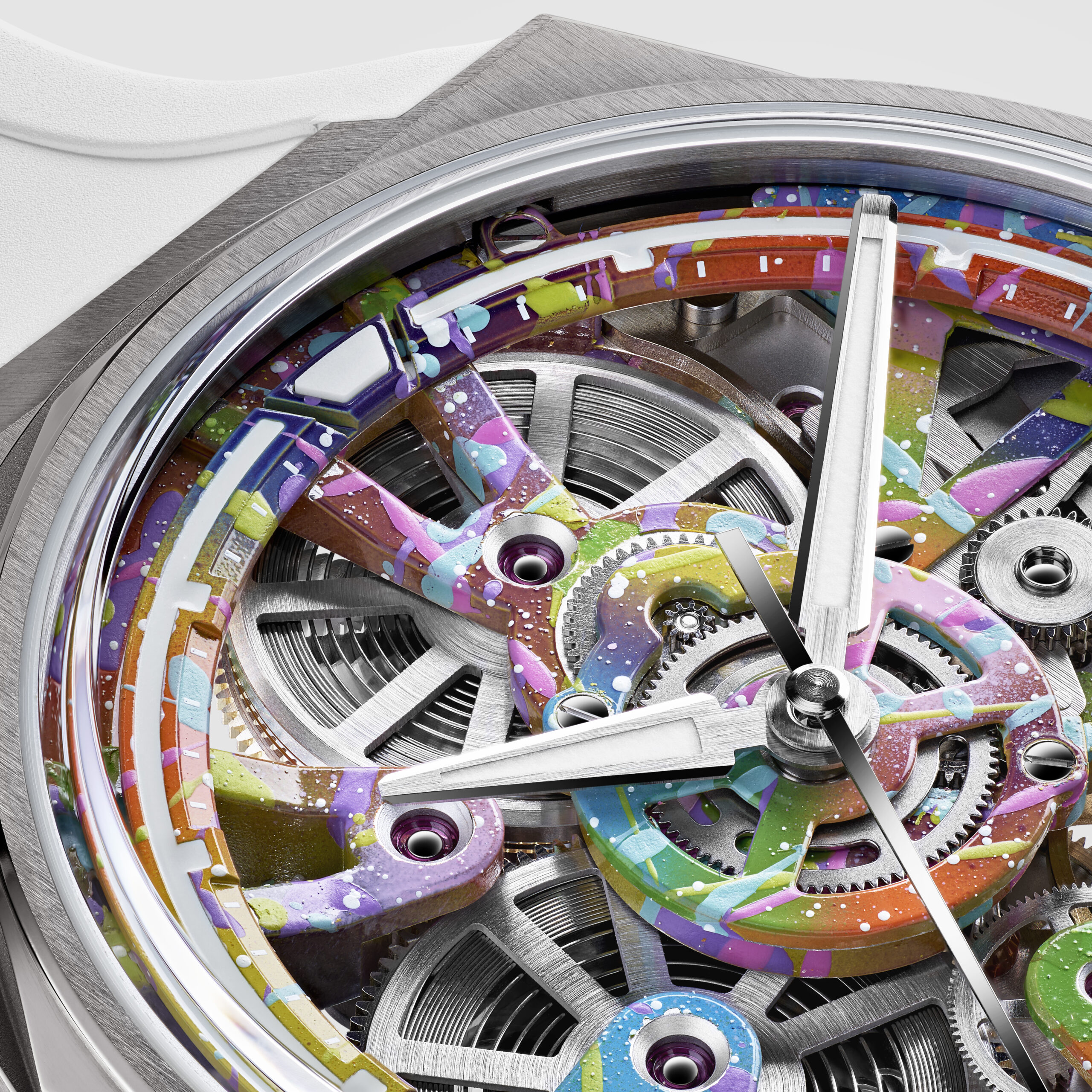
The scale of the studio work is what really sells this collaboration. Eight separate movement components are hand-painted per watch. Multiplied across 150 pieces, that comes to more than 1,300 individual components, each one primed, airbrushed, hand painted, and hand finished by Chris himself across roughly 900 hours of work in his Perth studio.
The technical requirement is where this project moves beyond a novelty. As Christopher Ward Product Director Jörg Bader put it: "This was as much a technical project as it was an artistic one. When you're working with a skeletonised movement, every component has a functional role and every tolerance matters." Paint thickness, surface preparation, masking, and finishing all had to be controlled without affecting the calibre's performance. This is not a decoration applied on top of an already-finished movement, this is finishing that had to survive the movement's mechanical brief.
The aesthetic itself is what Chris describes as "meant to look chaotic. It's meant to look fast. It's meant to look as if I've just taken a paintbrush and splattered paint. Unfortunately, I wish it were that easy." What you get on the wrist is vibrant splashes of colour across skeletonised bridges and visible movement components, in a register that reads as urban art rather than traditional watchmaking finishing. And because natural variation is inherent to the process, no two examples across the 150 piece run are identical. Every buyer is genuinely getting a one of one.
A Case of Two-Grade Titanium
The Twelve Xander uses a combined Grade 2 and Grade 5 titanium construction that Christopher Ward developed for the wider Twelve titanium platform. Case dimensions land at 41 millimetres in diameter, 12.3 millimetres in height, and 44.5 millimetres lug to lug. The integrated lug width is 25 millimetres. Water resistance is rated to 10 ATM, or 100 metres.
Grade 2 titanium delivers the softer visual character and lighter overall weight, while Grade 5 provides the structural rigidity in the areas that need it. The dual grade construction is one of the specifications that has quietly made the titanium Twelve one of the more considered integrated bracelet watches at this price point. On the wrist the case wears substantially lighter than the 41 millimetre diameter suggests, and the 44.5 millimetre lug to lug keeps the overall footprint properly wearable.
The case also has the correct visual restraint for a piece that is going to have this much colour happening on the dial and movement side. Titanium in the two grades that CW use here reads as a quiet backdrop rather than a competing visual event, which is exactly what a skeletonised hand-painted movement needs.
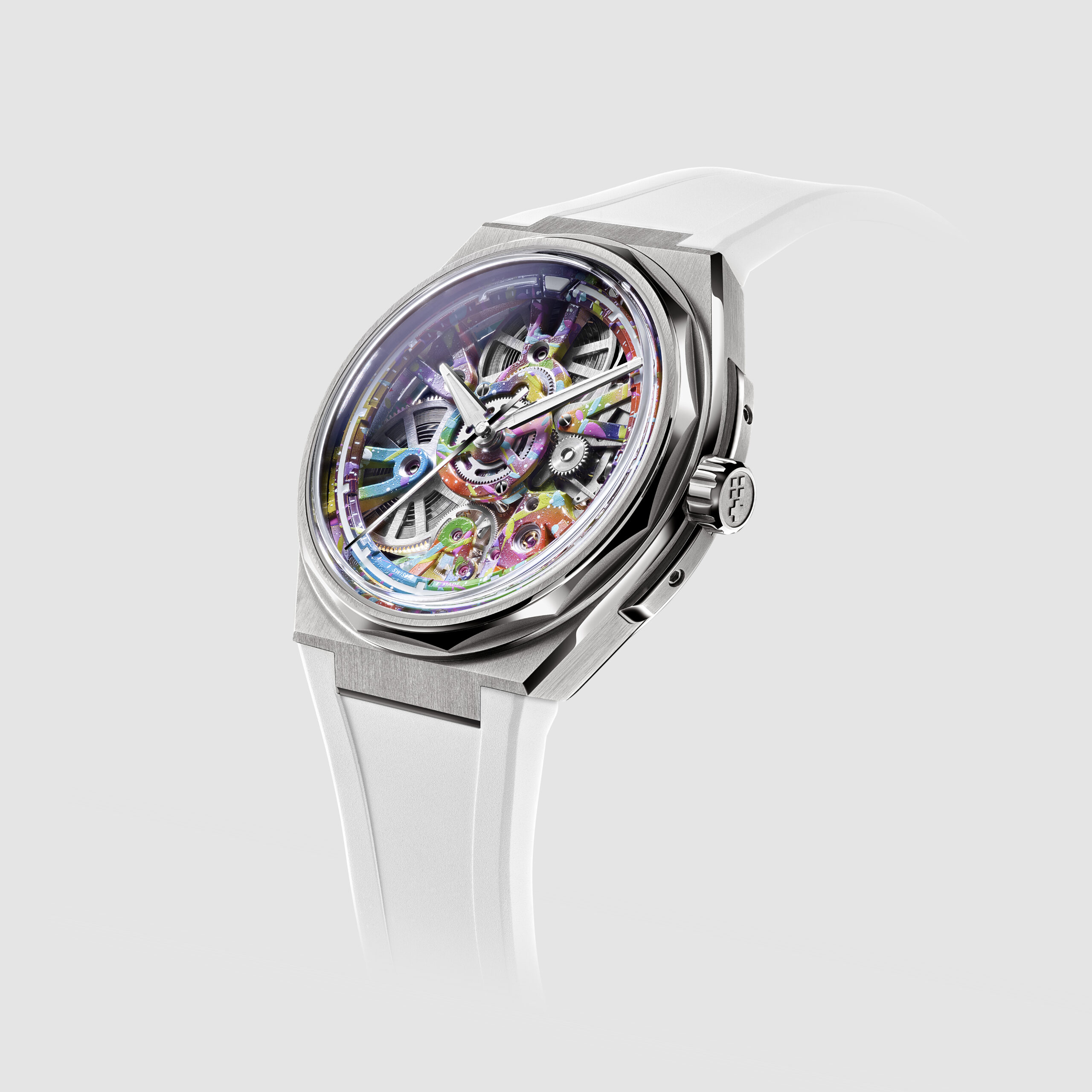
The CW-001 in Full Colour Under the Hood
Powering the Xander is the CW-001, Christopher Ward's in-house automatic calibre. Twin-barrel architecture gives it a properly impressive 120 hour power reserve (five days off the wrist and it is still running). Beat rate is 28,800 vph (4 Hz), jewel count is 26, and the movement is chronometer certified with a tight -4 / +6 seconds per day tolerance.
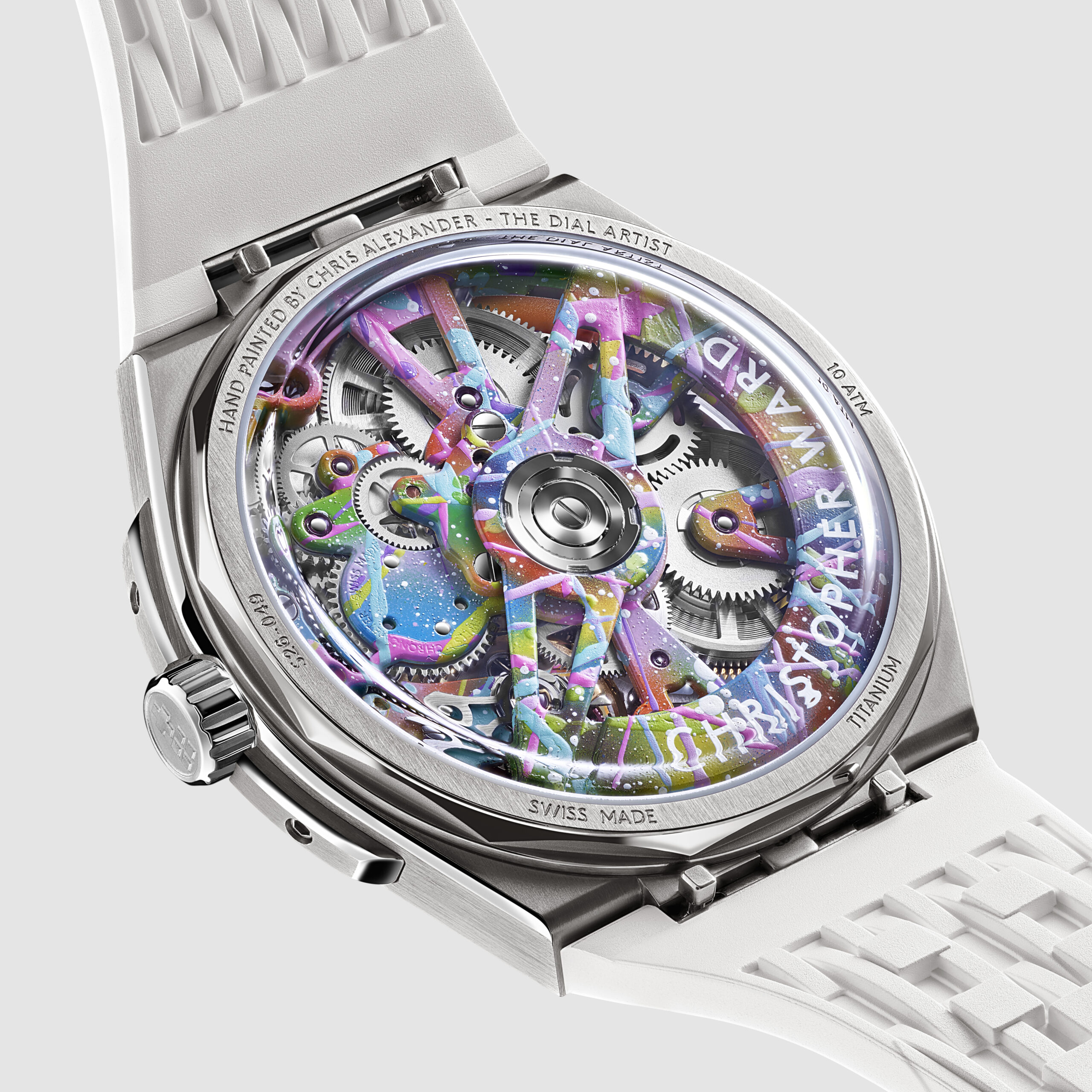
The CW-001 has genuine historical significance beyond the spec sheet. Christopher Ward describe it as the first commercially viable mechanical watch movement by a British brand in over five decades, which is not a claim any other brand at this price point can make. The movement is visible on both sides of the case, so the hand-painted work is on full display whether you are looking at the front or the back of the watch (which is exactly how a skeletonised movement of this quality should be shown off).
The combination of a genuinely in-house British calibre, a five day power reserve, chronometer certification, and the kind of finish work that most brands reserve for pieces at three or four times the price is where the Xander earns its position in the CW catalogue.
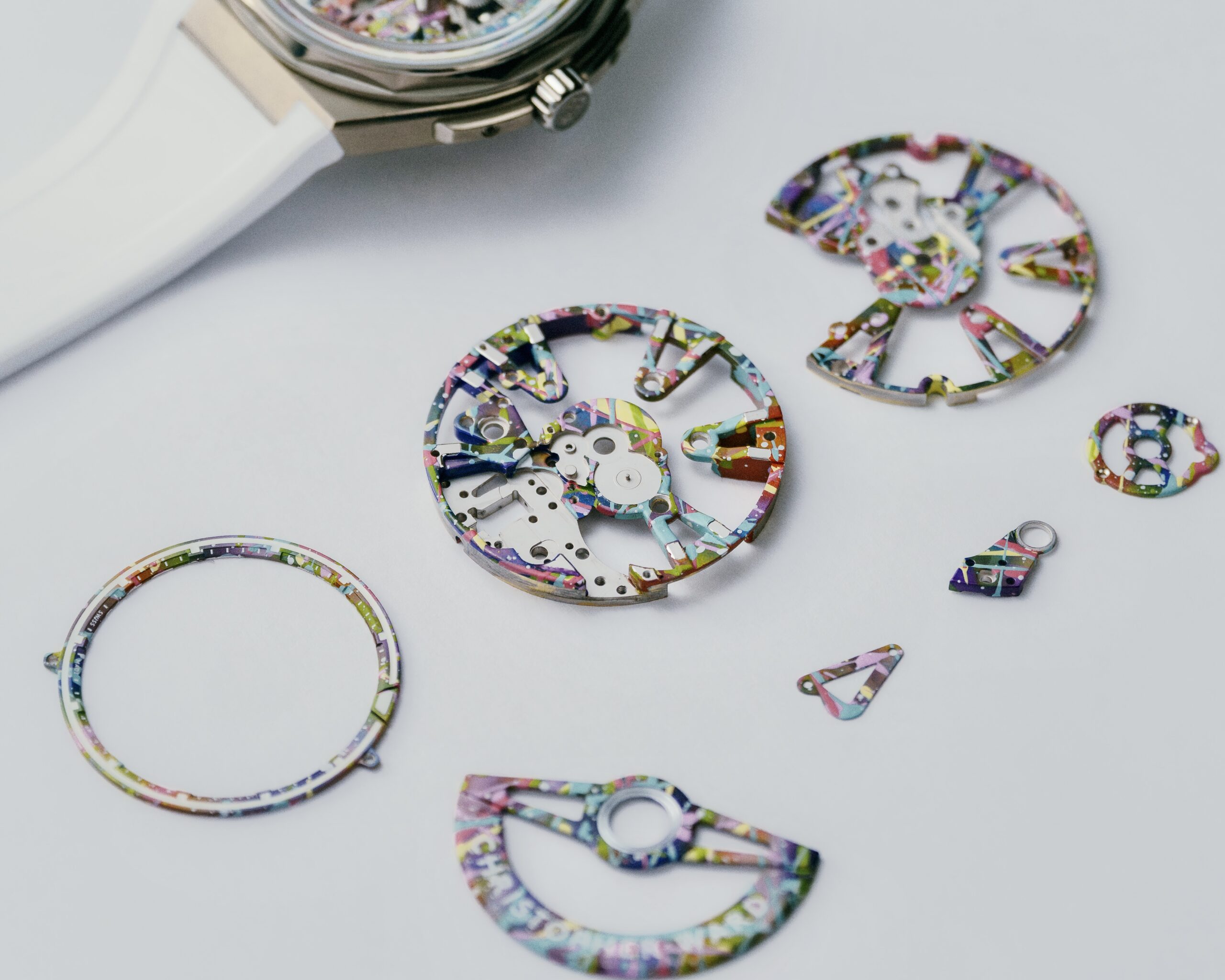
Strap, Bracelet and the 150 Piece Numbers
The Xander is offered in two configurations. The white rubber strap version comes in at $5,995 / €5,625, and the integrated titanium bracelet version is $6,515 / €6,125. The 25 millimetre integrated lug width means both options are properly designed for the case rather than aftermarket compatible.
Total production is capped at 150 pieces across both configurations. There is no numbering system announced, but because every example is genuinely unique due to the natural variation of the hand-painted components, each piece is effectively its own reference. It is a properly interesting departure from the usual "limited edition 150 of 150" model, where every watch is nominally the same but with a different number engraved on the caseback.
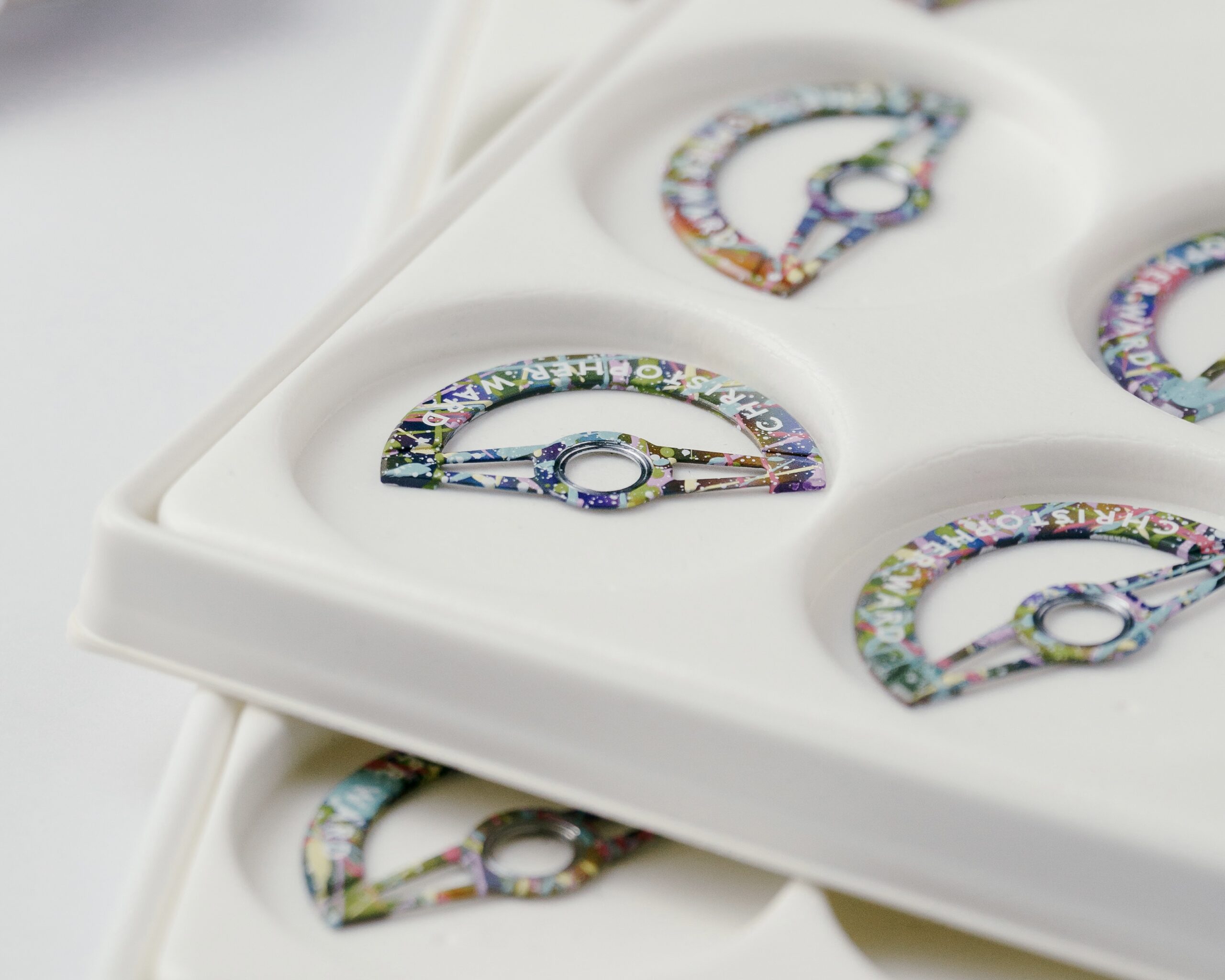
Why It’s Special
A few things in particular set the Twelve Xander x The Dial Artist apart from the increasingly crowded artist collaboration segment.
- 150 pieces, 150 genuinely unique watches: Most limited edition artist collaborations produce identical watches with different serial numbers. This one produces 150 genuinely different pieces because the hand painting varies naturally from example to example.
- The paint is on the movement, not only the dial: This is the first time Chris Alexander has worked on a movement rather than a dial, and it is one of very few recent collaborations where the artist’s work is applied directly to a functional in-house calibre visible from both sides of the case.
- 900 hours of studio work from a single artist: The collaboration is not licensed or reproduced. Chris personally hand painted more than 1,300 individual components over 50 days in his Perth studio, which is the kind of scale most artist collabs never actually commit to.
- A genuine in-house British calibre with a 120 hour power reserve: The CW-001 is the first commercially viable British in-house movement in over half a century, chronometer certified, and running at $5,995 / €5,625 as the entry price. Almost nothing else in the segment matches that combination.
A Skeletonised British Movement, Painted by Hand
The Twelve Xander x The Dial Artist is one of those rare collaborations where the maths on the studio side is properly staggering and the finished object justifies the numbers. It is also one of the more genuinely original artist collaborations we have seen at this price point, precisely because the artist worked on the movement rather than the dial and because every single one of the 150 examples is different.
At $5,995 / €5,625 on the white rubber strap and $6,515 / €6,125 on the integrated titanium bracelet, the pricing sits right at the top of the accessible in-house British movement segment and squarely below the point where independent Swiss houses start playing. For a chronometer certified in-house calibre with a 120 hour power reserve, hand painted across eight components by a working British artist, in a 150 piece unique-per-example edition, the value proposition holds up better than the price tag first suggests.
The public release window is short (Friday July 10 at 3 PM BST) and 150 pieces distributed globally is a properly tight allocation. If the idea of owning a genuinely one of one skeletonised British in-house calibre painted by a working street artist makes the back of your neck warm up a little, this is one to have your finger on the button for.
Specifications
- Brand: Christopher Ward
- Model: The Twelve Xander x The Dial Artist
- Case Material: Grade 2 and Grade 5 titanium combined construction
- Case Dimensions: 41mm diameter, 12.3mm height, 44.5mm lug-to-lug, 25mm integrated lug width
- Water Resistance: 100m (10 ATM)
- Strap: White rubber strap or integrated titanium bracelet
- Movement: CW-001, in-house British automatic, twin-barrel architecture, chronometer certified, 26 jewels, 28,800 vph, -4/+6 seconds per day tolerance, visible on both sides of the case
- Power Reserve: 120 hours
- Limited Edition: Yes, 150 pieces globally. Every example is genuinely unique due to natural variation of the hand-painted movement components
- Price: $5,995 / €5,625 on white rubber strap, $6,515 / €6,125 on integrated titanium bracelet

Image Gallery
About Christopher Ward Twelve Xander x The Dial Artist: Key Questions Answered
What makes each of the 150 Twelve Xander pieces genuinely unique?
Chris Alexander hand painted eight visible movement components on every single watch across the 150 piece run, working from his Perth studio in Scotland for approximately 900 hours. Because the process (priming, airbrushing, hand painting, and hand finishing) naturally varies from component to component, no two of the 150 pieces are identical. Each buyer is effectively getting a one of one rather than a numbered variant of the same watch.
How and when can I buy the Twelve Xander x The Dial Artist?
The public release is Friday July 10 2026 at 3 PM BST via the Christopher Ward website. An exclusive launch event runs the day before on Thursday July 9 at Christopher Ward’s Chicago showroom, and Chris Alexander will be at Windup Watch Fair Chicago from July 10 to 12 alongside the CW team. Total production is capped at 150 pieces globally across both the white rubber strap and titanium bracelet configurations.
What is the CW-001 movement and why does it matter?
The CW-001 is Christopher Ward’s first in-house automatic calibre and is described by the brand as the first commercially viable mechanical watch movement by a British brand in over five decades. It features a twin-barrel architecture with a 120 hour power reserve, is chronometer certified with a -4 / +6 second per day tolerance, and runs at 28,800 vph with 26 jewels. It is visible on both sides of the case, which is what makes the hand-painted collaboration possible.
Top Lists
- Astor & Banks, Baltic, Havaan Tuvali, Laco, MD Watches, STERNGLAS, Vario
- By Dan H.
- Baltic, Berneron, Dug Glashütte, Elka, Kurono Tokyo, Laco, Maen, Maurice Lacroix, Nomos Glashütte, STERNGLAS, Straum, Unimatic
- By Dan H.

- Dug Glashütte, Elka, Maen, MD Watches, Straum
- By Dan H.