Different Watch Types Guide: Dive, Pilot, Dress, Chronograph & More
- Dan H.
- January 28, 2026
Introduction
Different watch types can feel overwhelming at first, but once you understand the main categories and what they are actually good for, choosing the right microbrand piece becomes far more enjoyable. This guide breaks down the core watch types you will encounter as an enthusiast, with a focus on how they translate into real-world wear and where microbrands shine.
How watch types are usually grouped
Most mainstream guides split watches into two big buckets: what is inside (the movement) and what the watch is built to do (the style or use case). Movements are typically grouped into quartz, mechanical (manual wind) and automatic, while styles cover things like dive, pilot, field, dress, chronograph and travel watches.
In this article, we will mirror the same general categories but with concrete microbrand-oriented context rather than generic brand name-dropping.
1. Watch movements: the engine inside
Before we talk about dive or pilot watches, it helps to understand what makes them tick.
Quartz watches
Quartz watches use a battery and a vibrating quartz crystal to keep time, which makes them extremely accurate, low maintenance and usually more affordable. You can expect deviations of only a few seconds per month, and battery changes every couple of years are often the only service you will need.
For microbrands, quartz is often used in grab-and-go daily pieces or more design-driven models where thinness and price matter more than mechanical romance. Brands like Sternglass and some models from Laco and Maen have used quartz to deliver clean, modern designs that stay accessible and robust for everyday wear.
Mechanical (manual-wind) watches
A mechanical watch stores energy in a mainspring that you wind by hand, then releases it through a gear train and escapement to move the hands. There is no battery, just a long chain of tiny parts working together, which is why many collectors feel mechanically drawn to them despite lower raw accuracy than quartz.
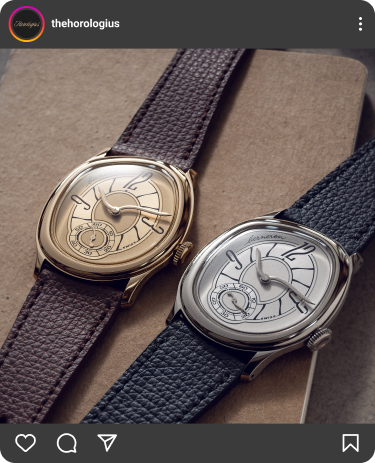
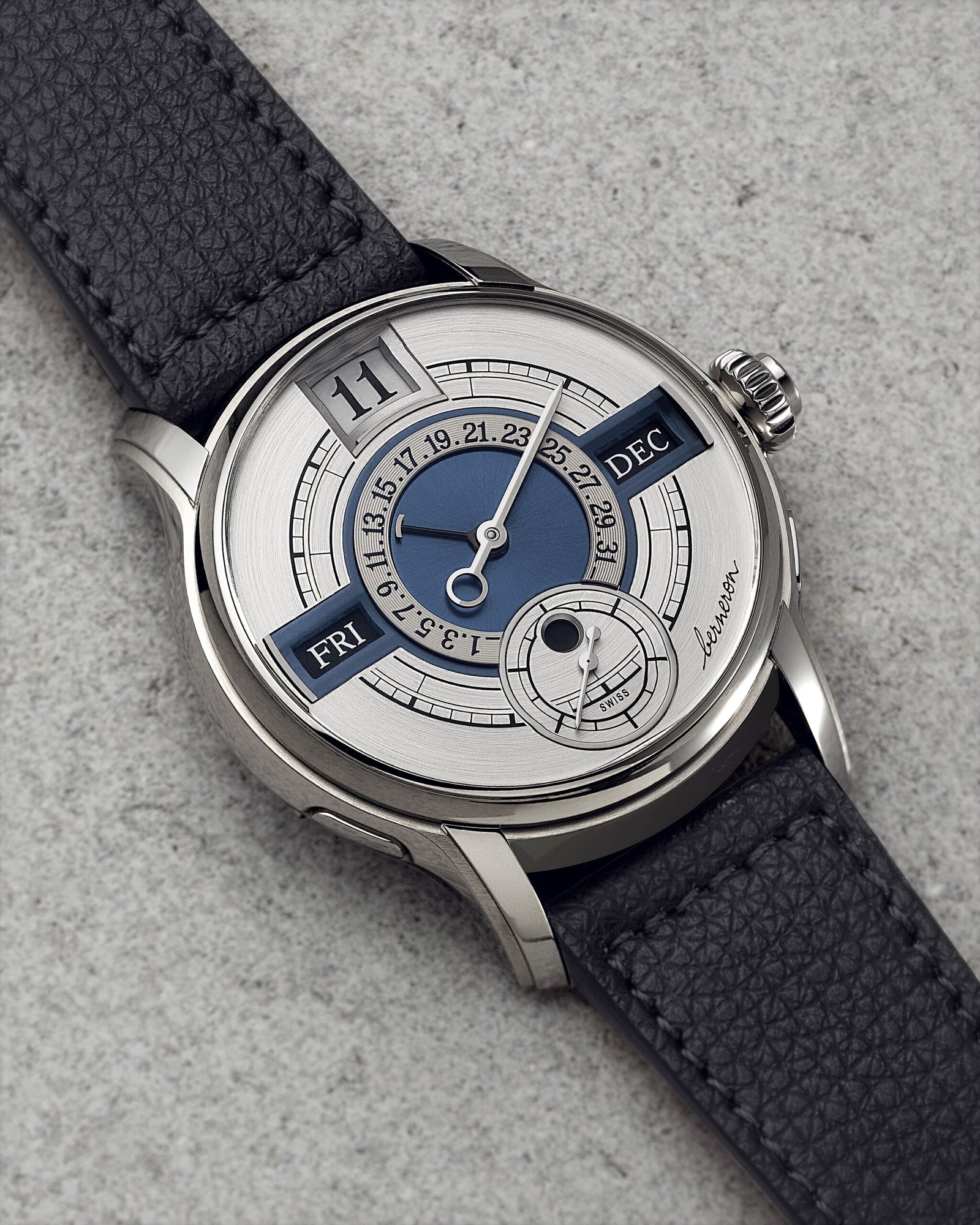
Manual-wind calibres are common in more traditional or enthusiast-focused pieces, especially when the brand wants to highlight the movement architecture itself. Skeletonised watches sometimes go a step further and expose the bridges, gears and balance, turning the calibre into the main visual event on the wrist. Independent makers such as Berneron also lean into hand-wound movements when they want the owner to actually interact with the watch daily, in the same way you might enjoy starting a classic car.
Automatic watches
Automatic watches are mechanical but add a rotor that swings with wrist movement to wind the mainspring. This means the watch can effectively stay wound as long as you wear it regularly, combining the emotional appeal of mechanical watchmaking with better day‑to‑day practicality.
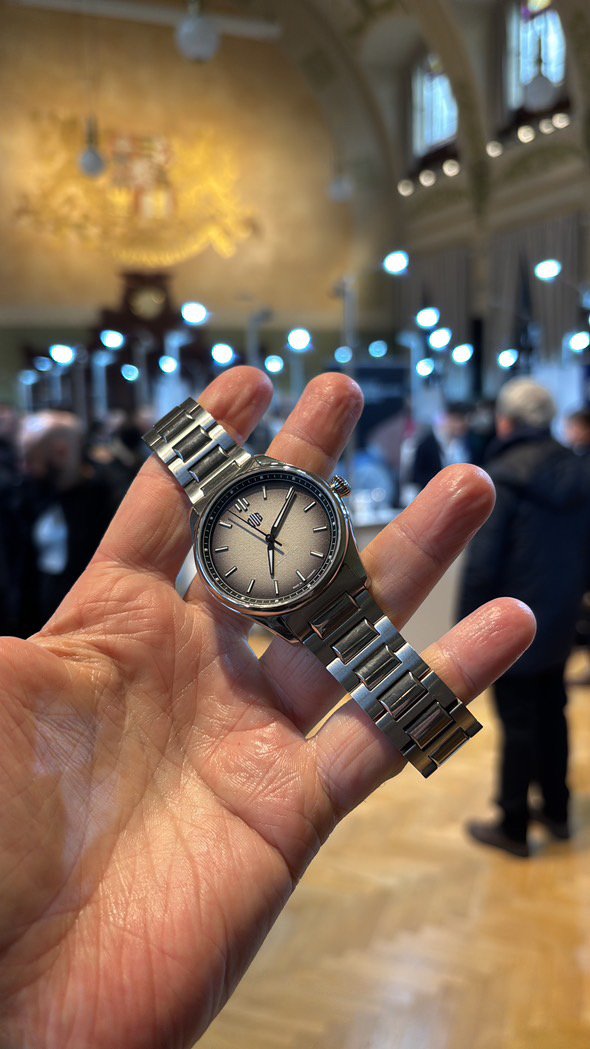
Most modern microbrand tool watches use automatic movements, from Japanese workhorses like the Miyota 9-series to Swiss calibres from Sellita and ETA. The Baltic Aquascaphe, for example, uses a Miyota 9039 automatic, pairing a slim, no-date architecture with a 42-hour power reserve to keep the case profile compact and the experience reliably “set and forget”.
2. Tool watches: built for a job
Tool watches started life as professional instruments built around specific tasks such as diving, flying or military field work. Today, most of us use them to time coffee or track a second time zone rather than survival manoeuvres, but the original functionality still shapes their design.
Dive watches
Dive watches are purpose-built for underwater use and are one of the most popular watch types today, far beyond actual divers.
Typical traits include:
- High water resistance (often 200 m or more)
- Screw-down crown and caseback for better sealing
- Unidirectional timing bezel to track dive duration safely
- Highly luminous hands and markers for legibility in low light
Modern dive watches that comply with ISO 6425 must pass tests for water resistance, shock resistance, legibility and anti-magnetism. Even when a watch is not formally certified, many microbrand divers follow similar principles because enthusiasts expect real-world capability rather than just a rotating bezel for looks.
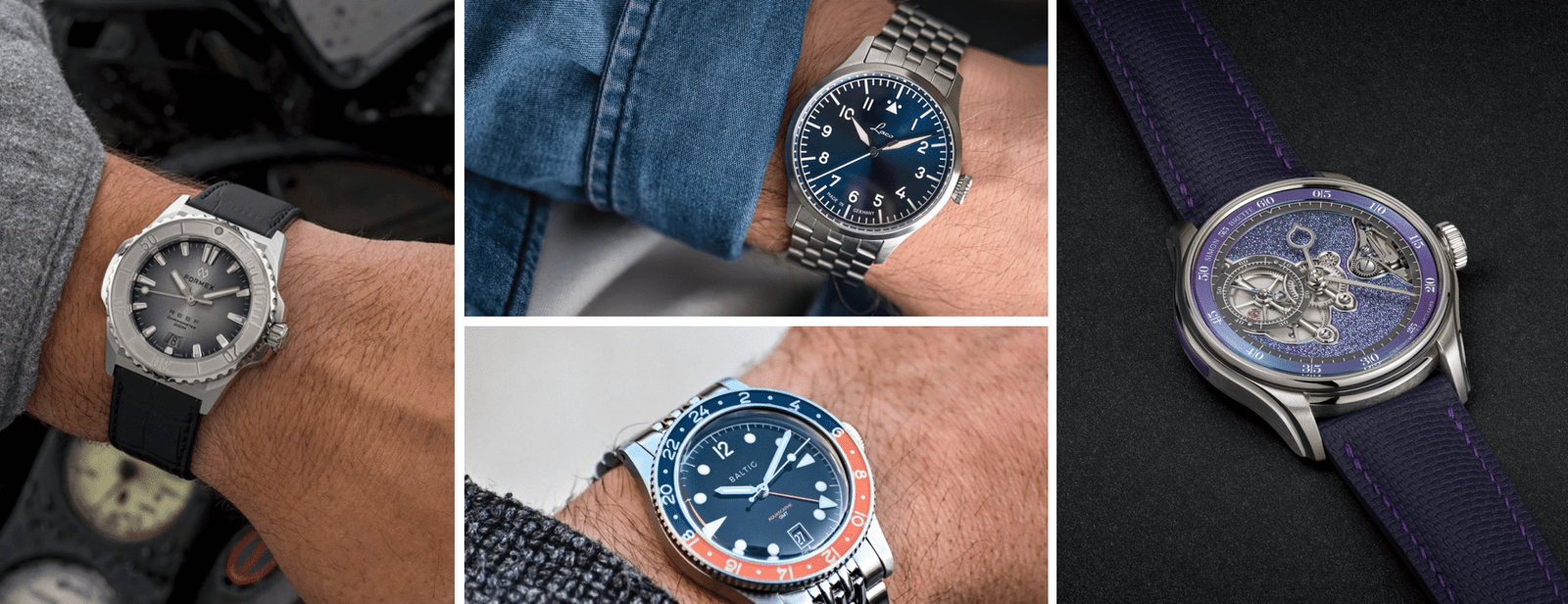
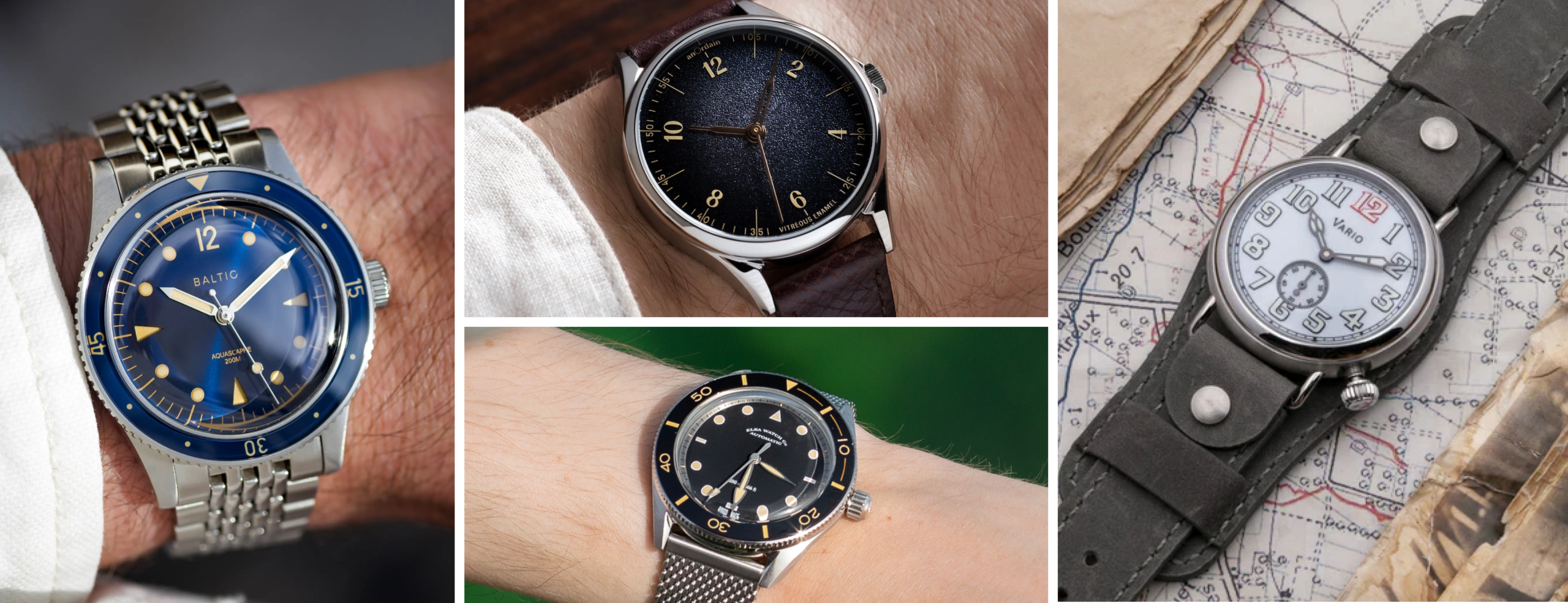
The Baltic Aquascaphe is a good example of a neo‑vintage microbrand diver: 39 mm case, 200 m water resistance, screw-down crown and a 120‑click unidirectional bezel, all wrapped in a design that nods to mid-century skin divers without copying a specific reference. Brands like Formex, Straum and Unimatic also offer modern interpretations that emphasise strong lume, robust cases and everyday versatility rather than purely desk‑diving aesthetics.

Pilot’s watches
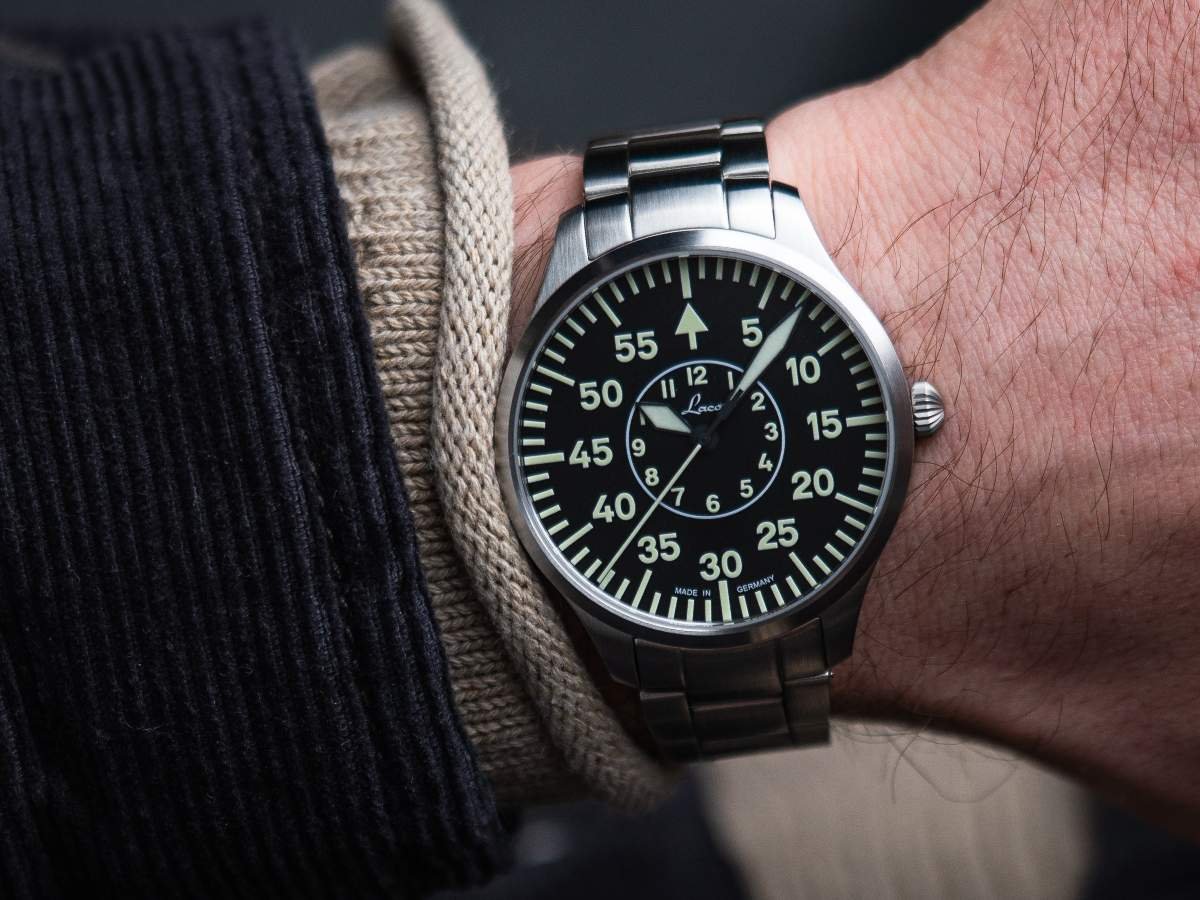
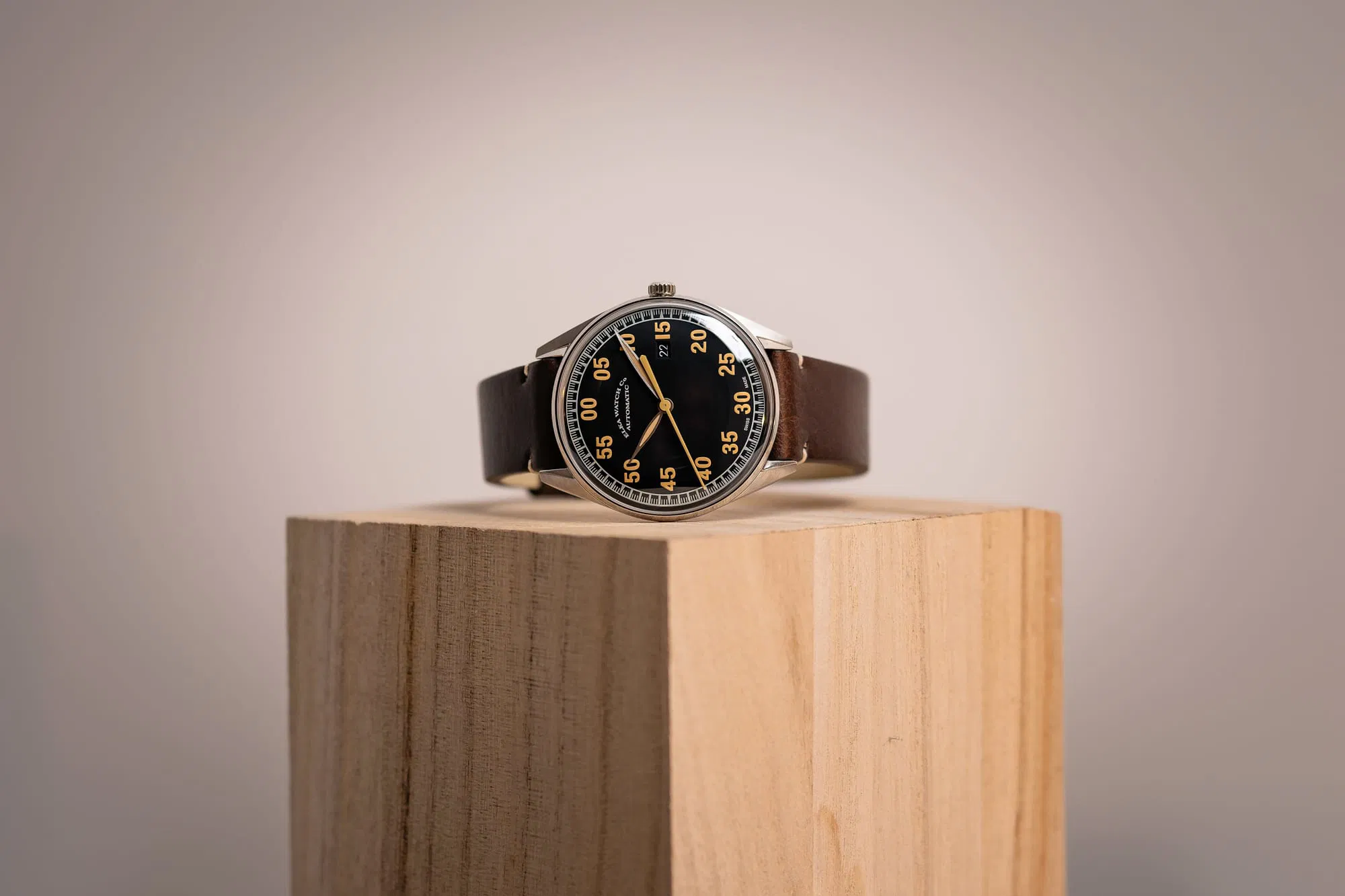
Pilot’s or aviation watches were originally developed for cockpit use, where quick legibility and resistance to shocks and magnetism mattered more than dressy refinement. Common features include large, high-contrast dials (often black with white numerals), oversized crowns that can be used with gloves, and clear orientation markers such as a triangle at 12 o’clock.
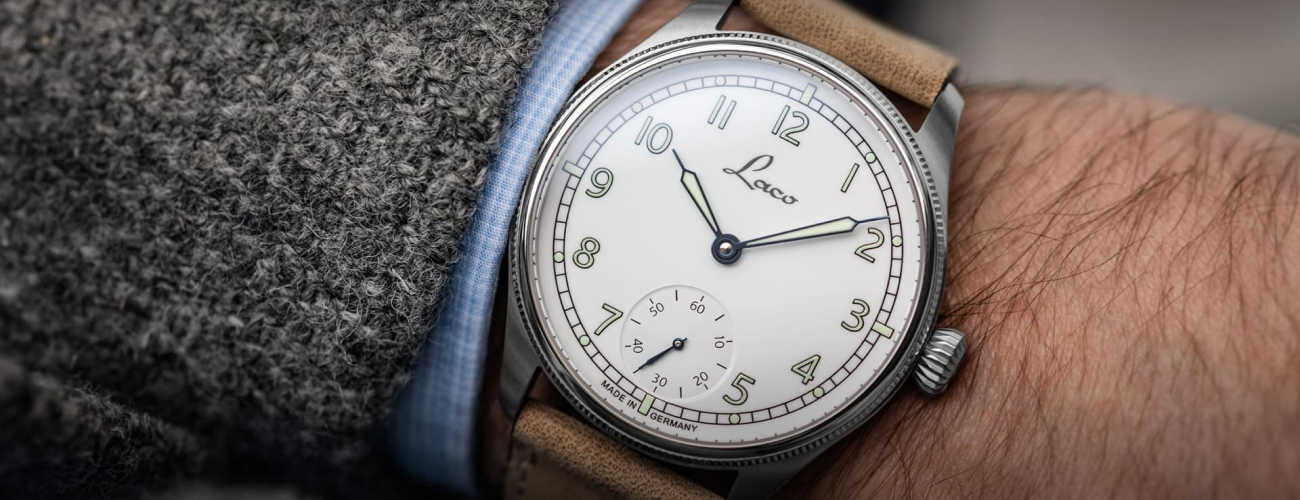
Many classic pilot’s watches were designed in the so‑called “B‑Uhr” style – with large cases and simple Arabic numerals – a design language that continues in modern pieces from brands like Laco. Today you will also find aviation-inspired watches that add chronographs, slide-rule bezels or GMT hands for tracking a second time zone, which makes them practical travel partners even if your flying is limited to economy class.

Field watches
Field watches trace their roots to military-issued pieces: compact, highly legible and tough enough for actual fieldwork. They typically feature moderate case sizes around 36-40 mm, simple Arabic numerals, strong lume and robust cases that can take a beating without drawing too much attention.
Microbrands often excel here because a good field watch is more about thoughtful proportions and materials than flashy branding. Formex has explored this space with its no‑nonsense Field models, using lightweight cases and clear dials that are easy to read at a glance. Other independent makers like Baltic and Unimatic have produced pieces that sit somewhere between field and everyday sport watch, blending brushed cases, clean dials and comfortable straps.

Chronograph watches
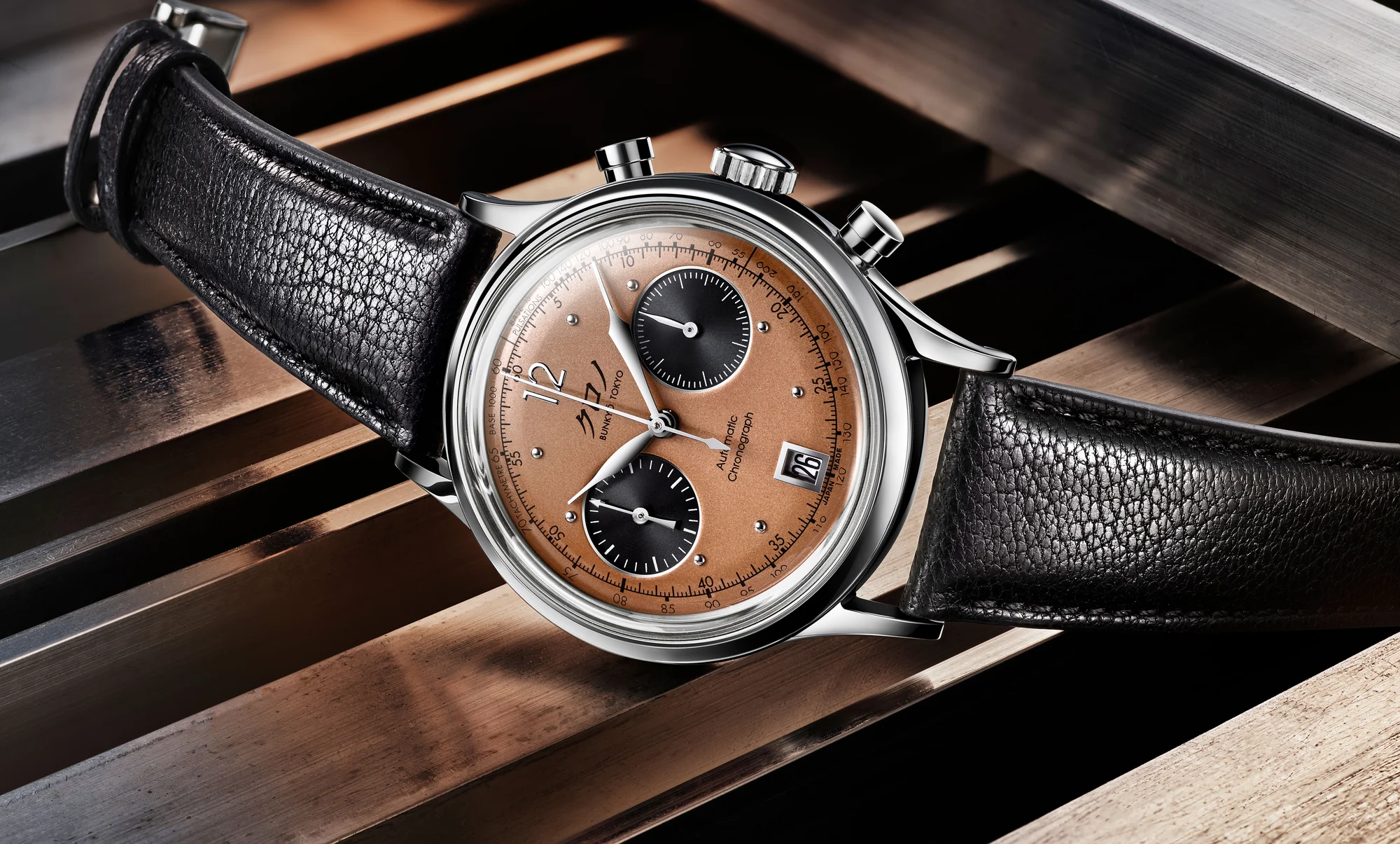
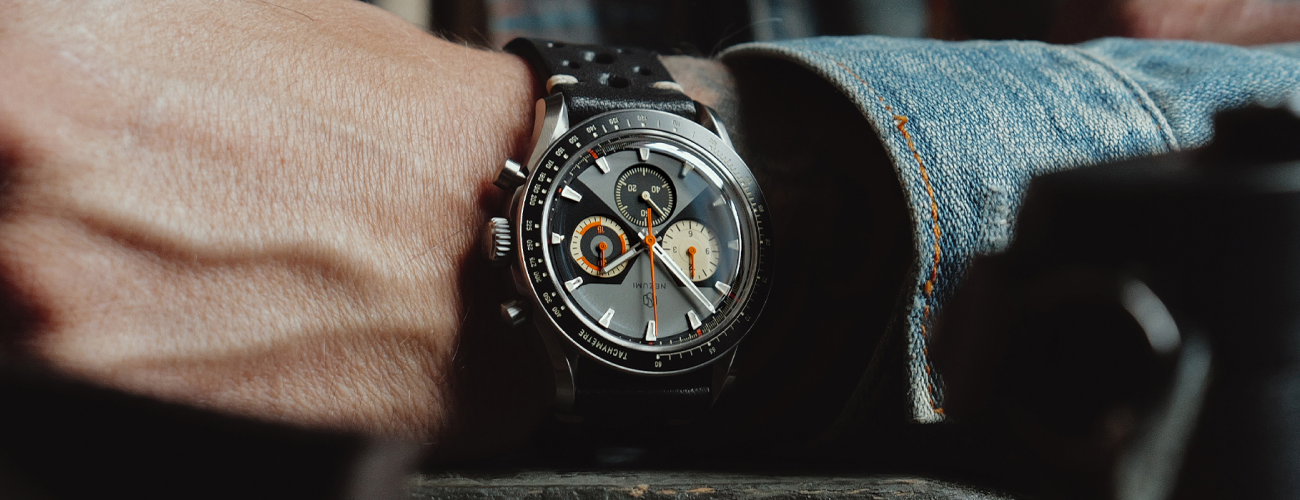
Chronographs add a stopwatch function to a standard time display, usually through pushers at 2 and 4 o’clock that start, stop and reset a central seconds hand and one or more sub-dials. They were originally used in everything from motorsport to aviation and medicine, where measuring elapsed time or heart rates on the wrist could be genuinely critical.
Today, chronographs remain one of the most recognisable watch types thanks to their multi-register layouts and tactile pushers. Microbrand chronographs range from vintage-inspired two-register designs powered by modular automatic calibres, to minimalist modern takes that keep the dial clean and focus on ease of reading. Kurono Tokyo, for example, has explored elegantly proportioned chronographs that retain classical styling while using modern movements and manufacturing.
GMT and travel watches
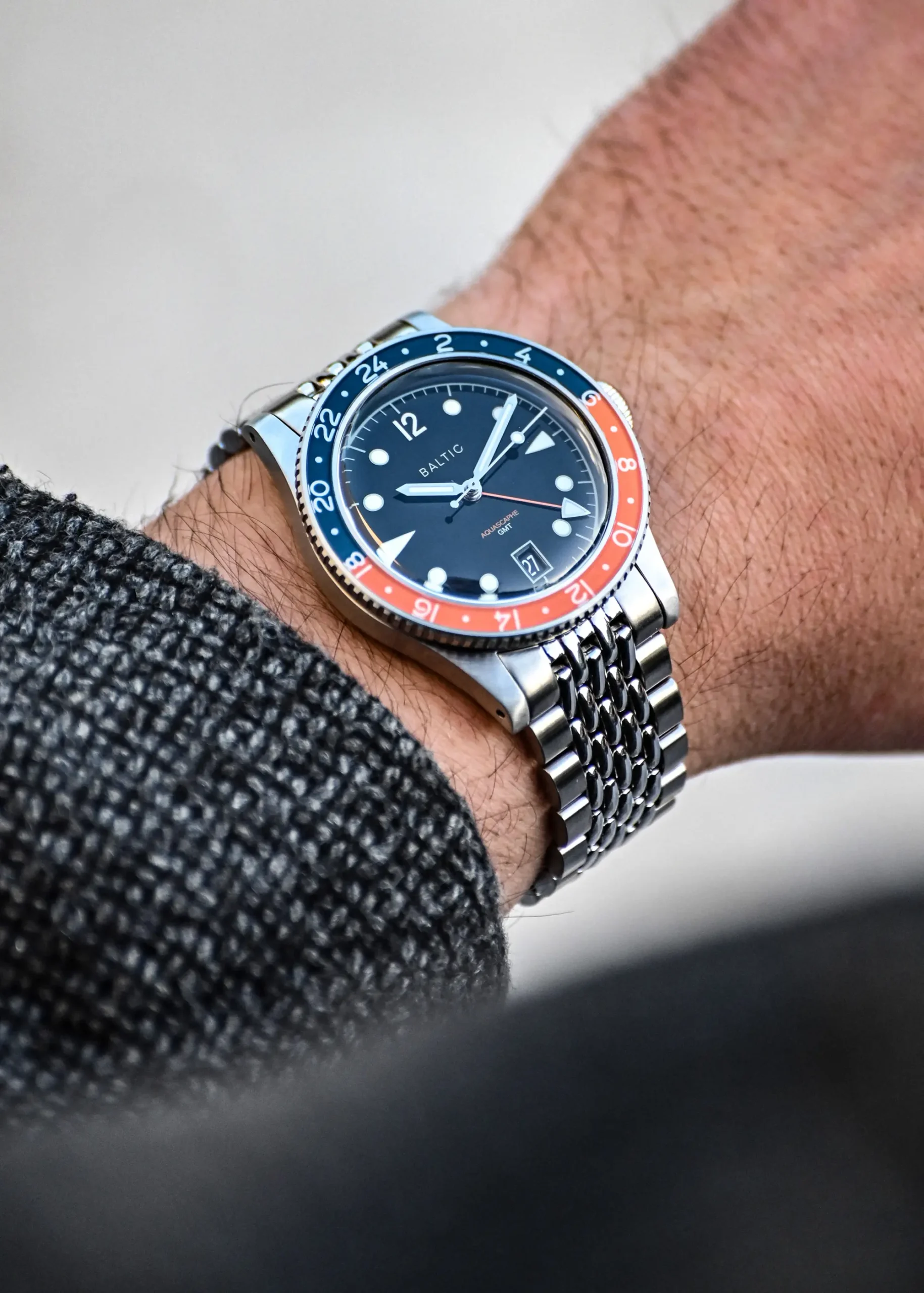
Travel watches are built to show more than one time zone at once, which is particularly useful if you routinely juggle home and destination time or work with distributed teams. The most common format is the GMT watch, which uses an additional hand that makes one full rotation every 24 hours, read against a 24‑hour scale on the dial or bezel.
Some GMT watches let you jump the local hour hand in one-hour increments while the 24‑hour hand keeps home time, which is the most convenient arrangement when you land in a new city. Microbrands such as Baltic, Nodus and others have offered GMT variants of their core dive or field platforms, pairing familiar cases with bicolour bezels and clear 24‑hour scales that make tracking multiple time zones intuitive rather than a visual puzzle.
3. Everyday watches: from desk to dinner
Not every watch needs a mission profile; some are simply designed to look good and feel right from morning coffee to late‑night emails. These pieces often borrow elements from tool, dress and sports watches, blurring categories in ways that suit modern life better than rigid definitions.
Dress watches
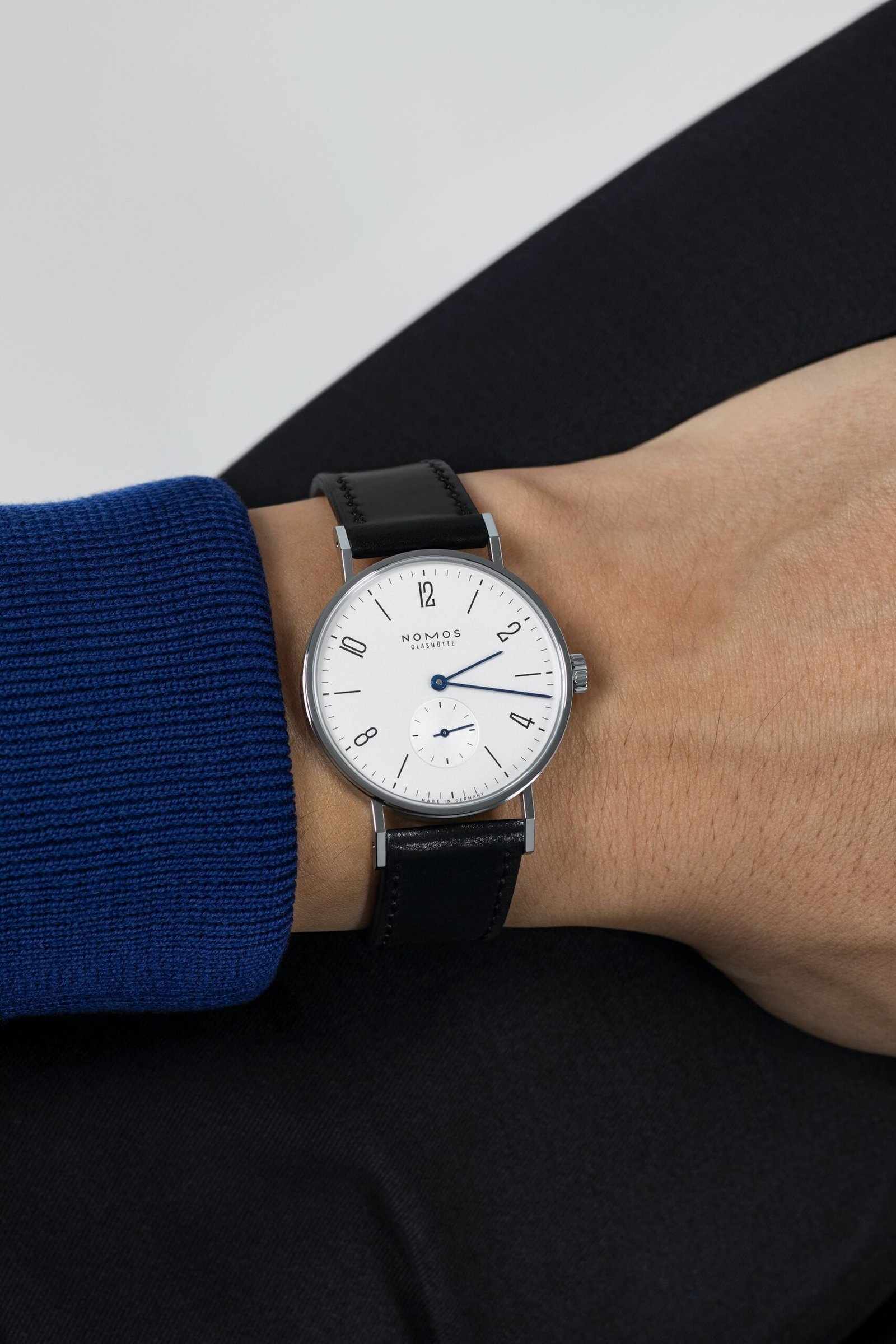
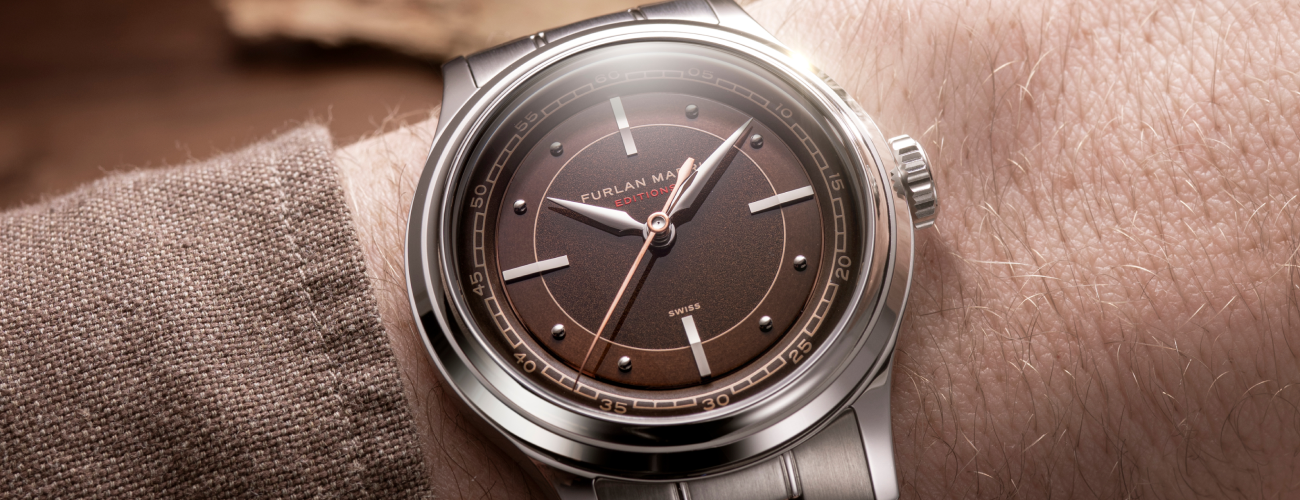
Dress watches are usually the simplest type of watch: slim, minimal, and designed to slide under a cuff without calling attention to themselves. Classic traits include smaller case sizes, restrained dials with minimal text, and often leather straps rather than bracelets.
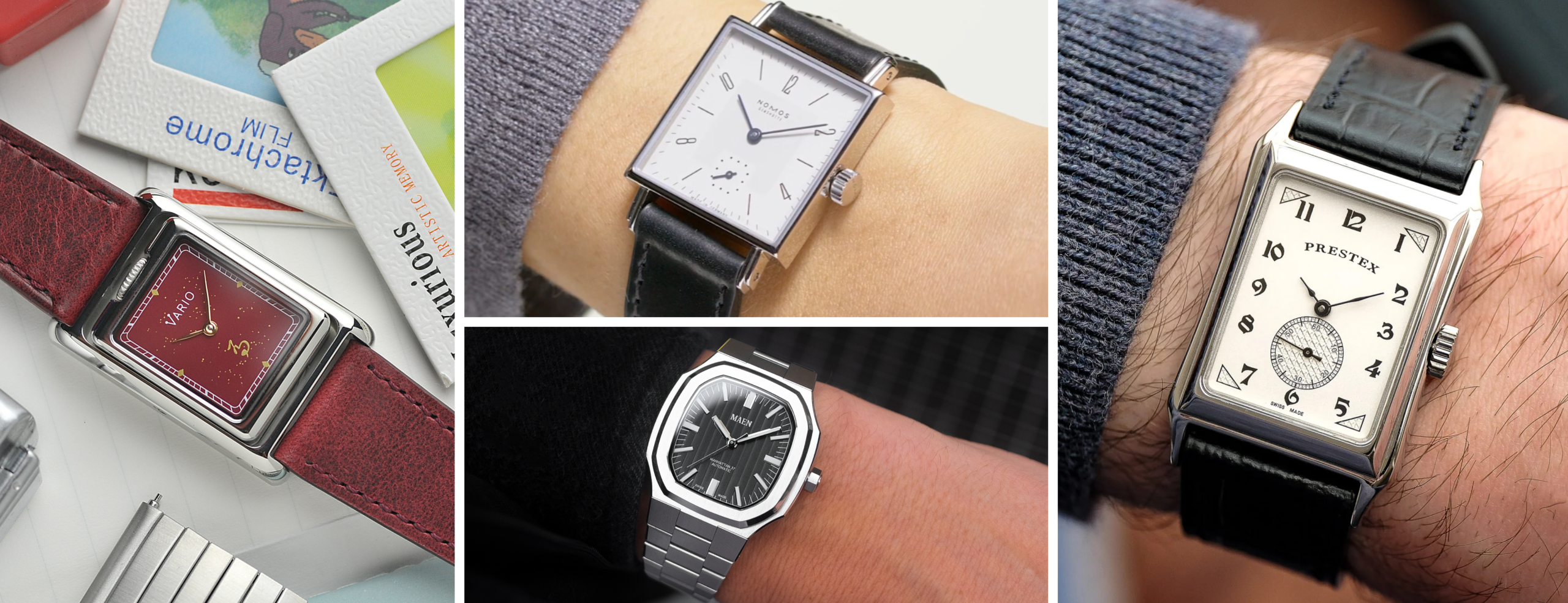
Microbrands and independent makers have embraced this category in different ways. Kurono Tokyo has built a following around vintage‑inspired dress pieces with rich colours and polished cases, while brands like Nomos Glashütte explore modern Bauhaus lines that still feel refined enough for formal settings. Even within brands known for sportier profiles, such as Baltic or Maurice Lacroix, you will often find references that lean more dressy, focusing on thin bezels, clean dial layouts and comfortable straps instead of bezels and crowns built for extremes.
Sport and integrated-bracelet watches
Sport watches sit somewhere between field and dress, offering solid water resistance and legibility in a package that still feels appropriate with a shirt and blazer. Many modern sport watches feature integrated bracelets or sharper case lines that hug the wrist and read more “urban” than utilitarian.
The Maurice Lacroix Aikon line is a prime example of the integrated-bracelet steel sports watch: bold, architectural cases, distinctive bezels and strong bracelet design that emphasise everyday wear over a single functional niche. Microbrands such as Maen, Straum and others have also entered this territory, using crisp case geometry and tight tolerances on bracelets to deliver high perceived quality without straying into the five‑figure territory dominated by big luxury names.

Minimalist and design-driven watches
There is also a growing category of minimalist or design-first watches that prioritise aesthetics and wrist presence over strict adherence to any historical template. These watches may take inspiration from architecture, graphic design or mid‑century furniture, and they often appeal to people who see a watch as a wearable object rather than a piece of equipment.
Independents like Simon Brette, Straum (with their beautiful Aurora Sky) and others explore textures, depth and material contrasts to create dials that feel more like small artworks than mere time-telling surfaces. Even when the underlying movement is a familiar automatic calibre, the way it is framed – through skeletonisation, multi-level dials or unusual case materials – can give a watch a very distinct personality.

4. Calendar and complication watches
Beyond basic time-telling, many watches add complications: additional functions such as calendar displays, moonphases or power-reserve indicators. While entry-level tool watches may include simple date windows, more advanced pieces can encode complex calendar logic into surprisingly wearable cases.
Simple date and day-date watches
The most common complication is a simple date window, often at 3 or 6 o’clock, which uses a rotating disc under the dial to show the current date. Many everyday and tool watches add this feature because it is genuinely useful and requires relatively modest additional complexity.
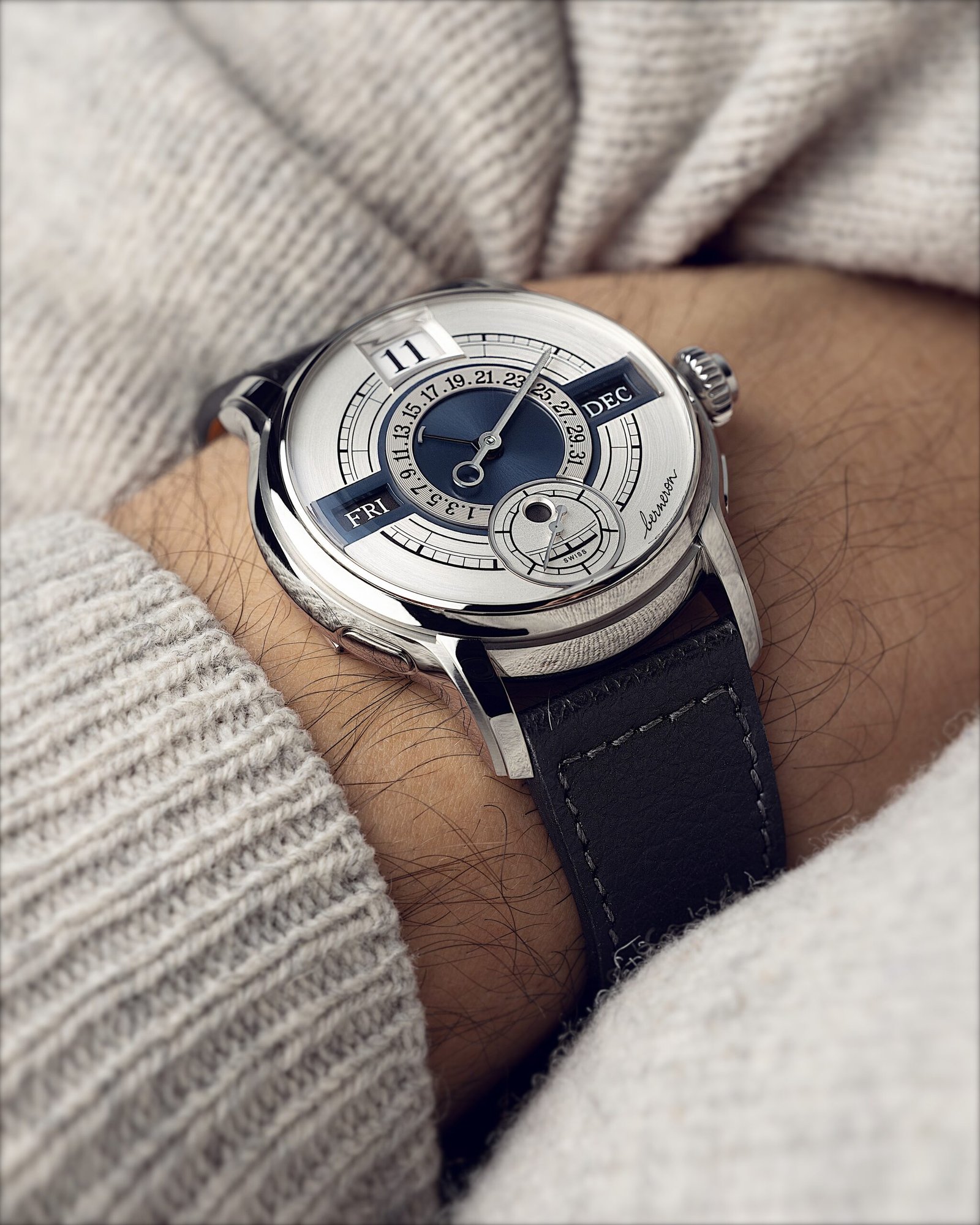
Day-date watches go further by showing both the day of the week and the date, usually through a second aperture or an arc-shaped window. These functions are generally easy to set via the crown and, in modern movements, are designed with “no-go” zones or safety mechanisms to reduce the risk of damage when adjusting near midnight.
Annual and perpetual calendars
Annual and perpetual calendars sit at the more sophisticated end of the spectrum. An annual calendar is programmed to distinguish between 30- and 31-day months and only needs manual correction once per year, around the end of February, while a perpetual calendar can account for leap-year cycles and may not need correction for decades if kept running.
These systems are mechanically complex, which is why they have historically been associated with high-end brands and more traditional watchmaking. Independent watchmaker Berneron has taken a collector-centric approach with its Quantieme Annuel, pairing a platinum case and gold movement with a cross-shaped architecture designed for intuitive reading and safer setting logic that avoids impossible dates such as 30 February. By focusing on legibility, robust safety systems and practical case dimensions, it shows how even very complicated watches can be built for real wrist time rather than just safes and exhibitions.
5. How to choose the right type for you
Knowing the categories is helpful, but the most important step is mapping them to your actual life and tastes. A dive watch can absolutely be a daily wearer, and a field watch can double as a casual office companion; the trick is being honest about what you will really do with the watch.
Here are a few simple starting points:
- If you want one watch to do everything: look at compact dive or field watches with at least 100–200 m water resistance, clear lume and automatic movements; they will handle everything from rain to weekend trips without drama
- If you spend most days at a desk but like a watch with presence: consider a well-proportioned sport watch on bracelet, or a clean chronograph that pairs easily with both shirts and knits
- If you enjoy the ritual of winding and setting: a hand‑wound dress watch or a more complex calendar piece can turn that morning 30 seconds into a small, daily anchor
Microbrands and independents have become some of the most interesting players across all of these types, precisely because they can focus on specific niches and enthusiast-friendly details rather than mass‑market compromise. Whether it is a neo‑vintage diver like the Baltic Aquascaphe, a design-forward skeletonised sports watch from Maurice Lacroix and Label Noir, or a meticulously thought-out annual calendar from Berneron, the modern landscape of watch types has never been richer, especially if you are willing to look beyond the usual suspects
Top Lists
- anOrdain, Baltic, Elka, Furlan Marri, Havaan Tuvali, HEINRICH Watches, Laco, Ophion, Vario
- By Dan H.
- Astor & Banks, Baltic, Havaan Tuvali, Laco, MD Watches, STERNGLAS, Vario
- By Dan H.