DWISS S1 Wandering Hours Review: A Swiss Microbrand Orbit
- Dan H.
- October 5, 2026
Something Special in Orbit
Every once in a while I get the chance to cover a piece that feels genuinely special, from a brand I have quietly admired for a long time. The DWISS S1 Wandering Hours is exactly that kind of watch. I have been in love with the craftsmanship coming out of DWISS for years, mostly from a distance, scrolling through vivid colourways and unusual time displays and wondering why more microbrands do not take swings like these. So I will be honest from the start: I am very happy to finally write about them.
DWISS was founded in 2011 in Lugano, Switzerland, by industrial designer Rafael Simoes Miranda. The name stands for Design Watch Independent Switzerland, and the order of those words is not an accident. Design comes first, and the brand has spent more than a decade reinventing how a watch can show the time, with displays it calls Mysterious Hours, Displaced Hours, Floating Hours, and Signature Hours. In a microbrand space crowded with very competent divers and field watches, DWISS keeps building watches that are about the act of reading time itself.
The S1 is the most ambitious DWISS to date. It is less a single watch than a family: six dial colours (blue, green, salmon, black, orange, and silver), each limited to 50 pieces, all sharing a new case and a wandering hours complication inspired by the Moon's orbit around the Earth. Pricing starts at $2,829 / €2,512.95. Let's start with the part that makes people lean in.
A Dial Where the Hours Go Wandering
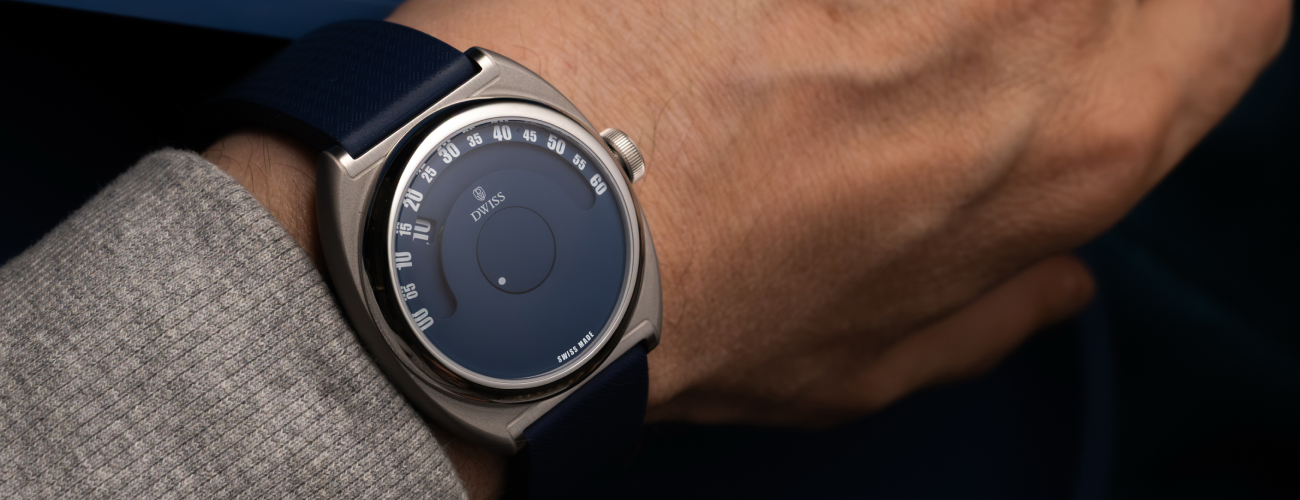
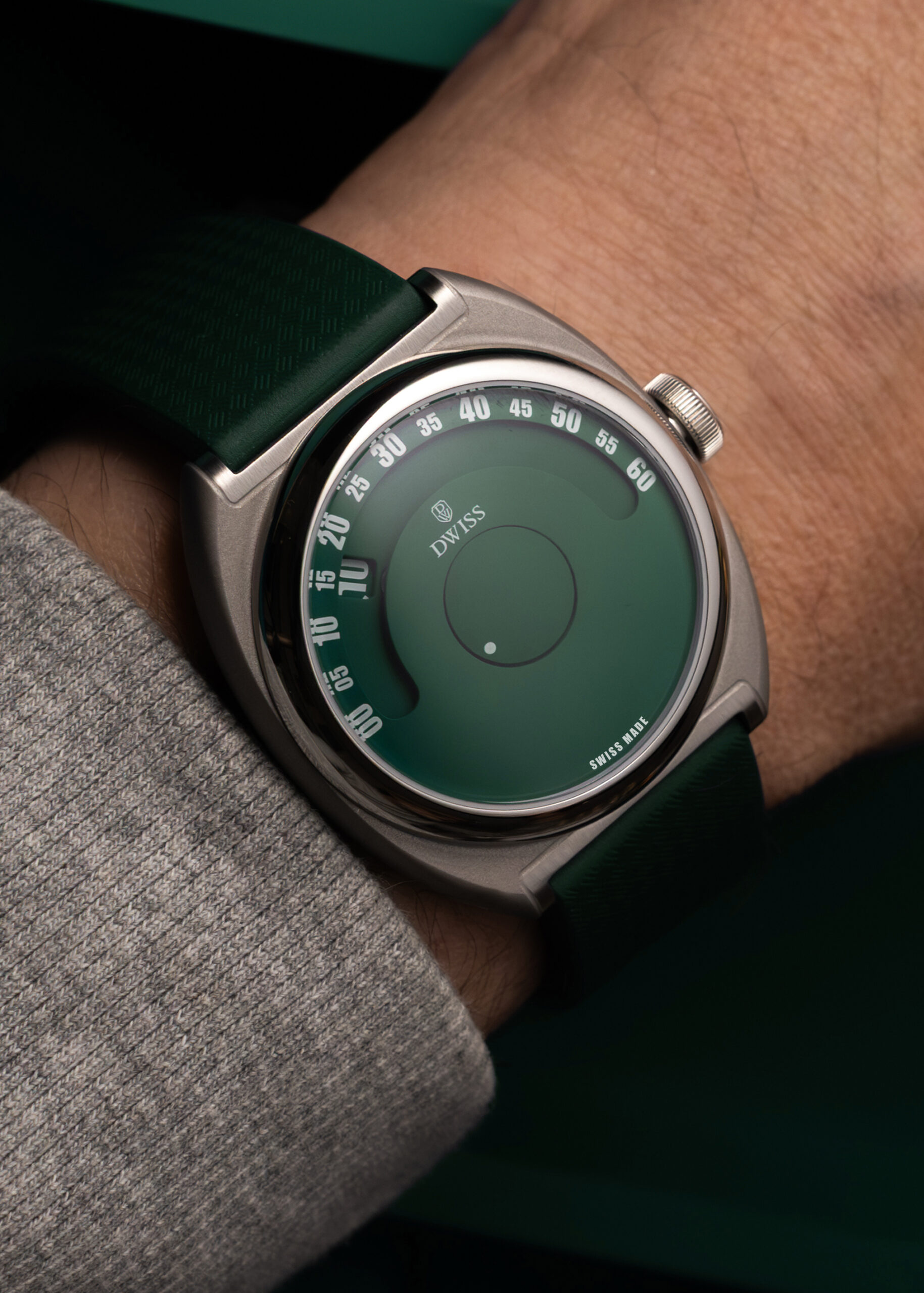
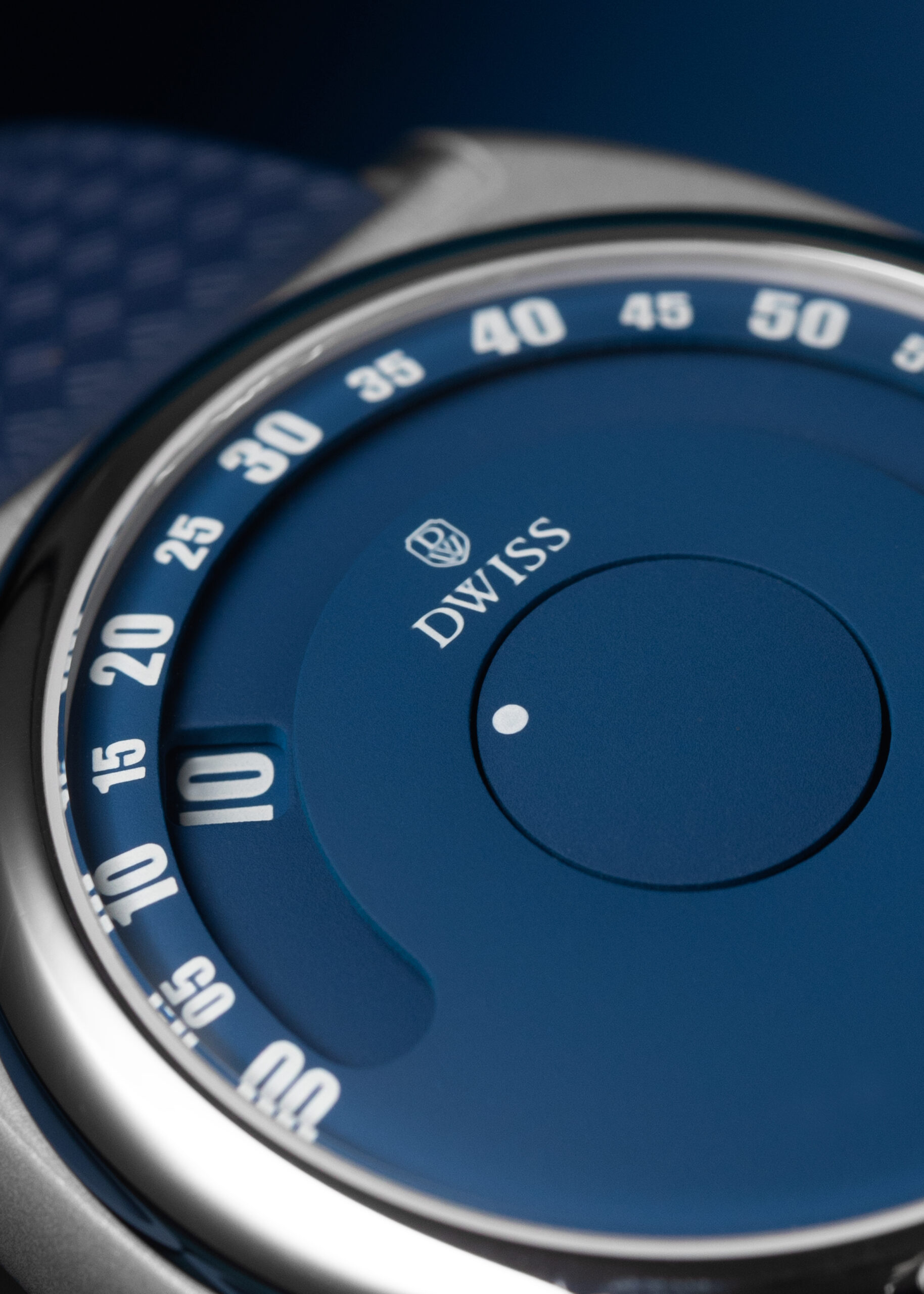
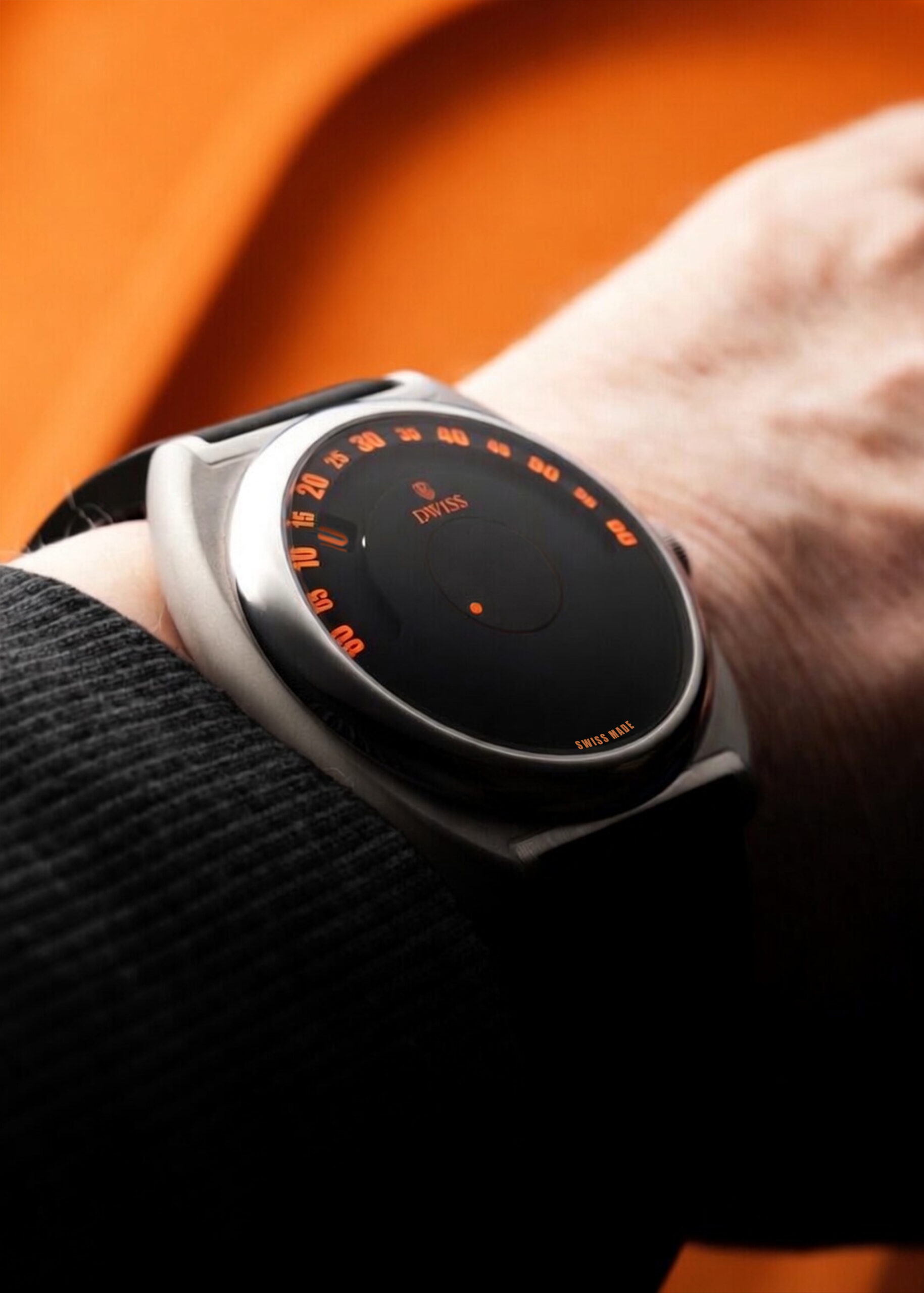
The wandering hours complication is one of those mechanisms that sounds complicated on paper and then becomes instantly intuitive on the wrist. There is no hour hand and no minute hand. Instead, two satellite discs share the job, one carrying the odd hours and the other the even hours. The current hour travels slowly across the upper half of the dial, sweeping along an arc graduated in minutes, and wherever that numeral sits on the arc is the time. At 20 past three, the 3 sits a third of the way along its journey; when it reaches the end, the 4 is already rising to take its place.
DWISS frames this through the rotation of the Moon around the Earth, and once you know the reference, it is hard to unsee. The hours behave like little satellites in orbit, while the centre of the dial gets its own rotating disc for the running seconds (a nice touch, because it means the whole face is always in motion). The lower half of the dial is left open, which gives the watch breathing room and keeps the composition from feeling busy.
What impresses me most is how cohesive the execution is. The layout is clean, the arc is legible at a glance, and every colourway has been considered as a complete object rather than a dial swap. On paper this is a playful complication. In reality, it reads faster than you would expect, and it is dangerously addictive for anyone already prone to wrist checking.
Colour With Conviction
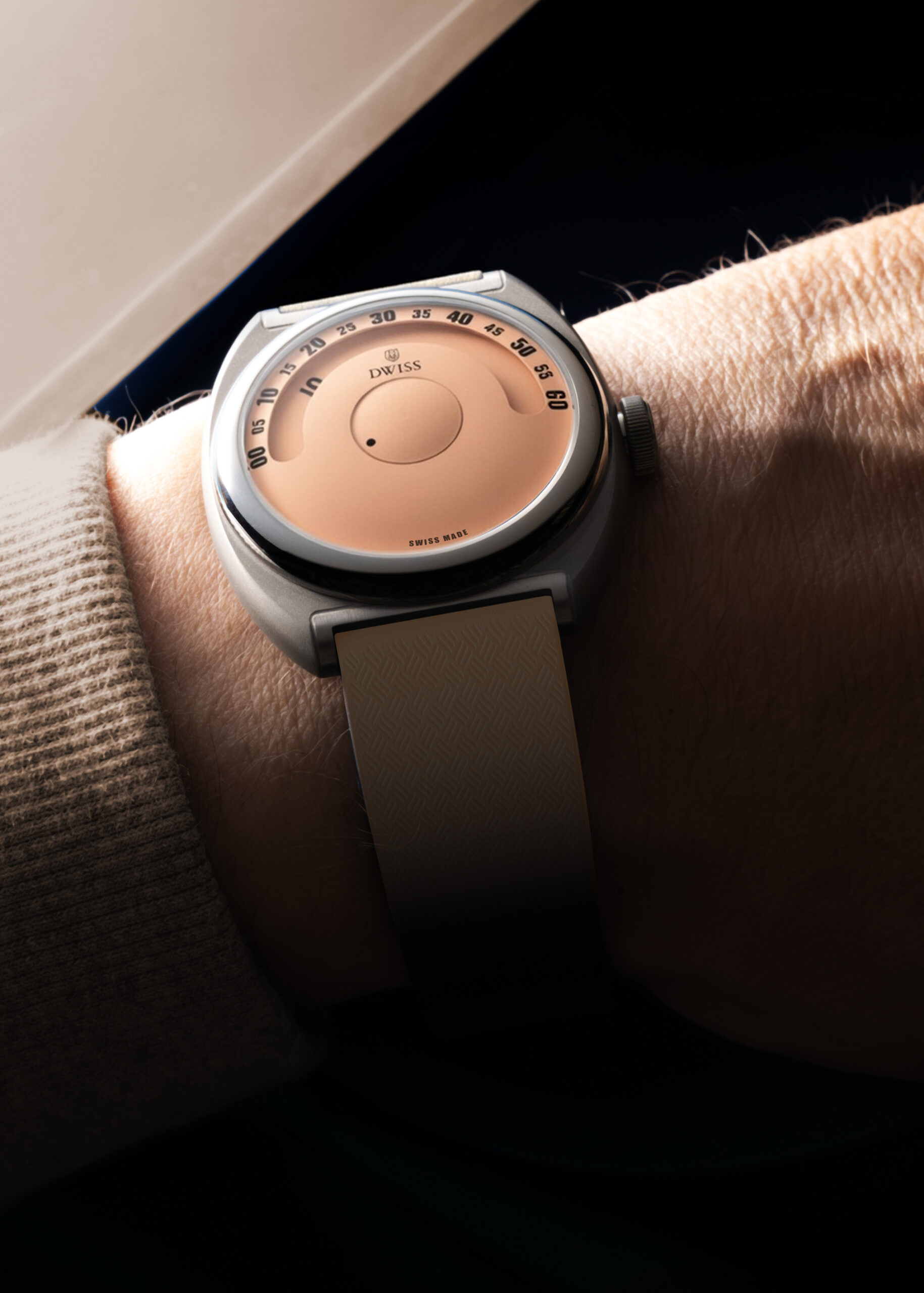
This is where DWISS really separates itself, and where I have to admit my bias. The S1 colour choices are some of the best I have seen from a microbrand this year. Blue, green, and salmon cover the range from cool to warm; black gives you the most restrained version of the idea, lifted by orange numerals; silver arrives with a circular brushed dial and blue numerals for a crisp, technical look. Each one pairs with a matching or complementary rubber strap (the salmon goes khaki, the silver goes blue), and the orange and silver dials are also offered on alternative black and white straps respectively, so the watch feels designed head to toe.
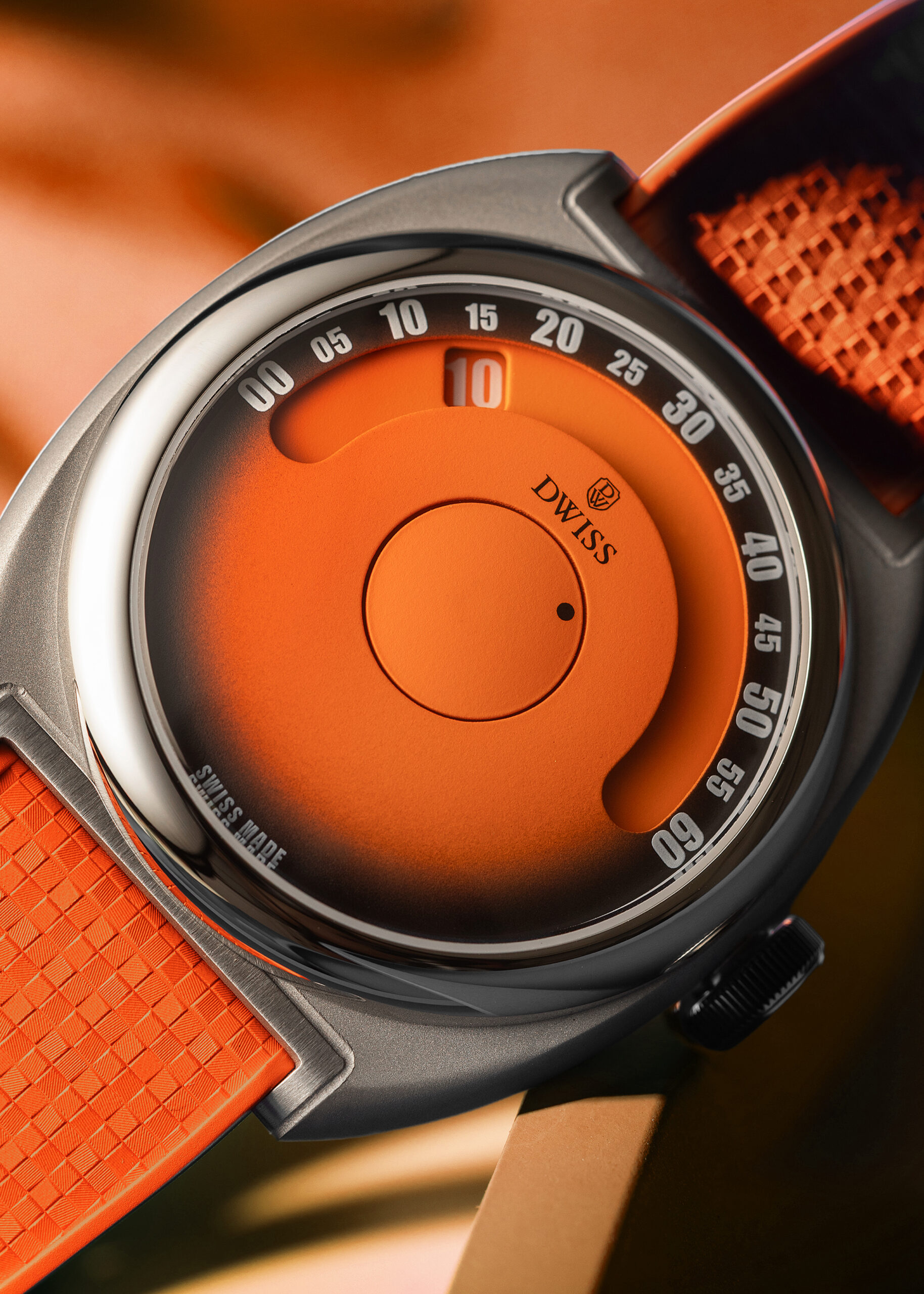
My favourite, without hesitation, is the S1 Orange on the orange strap. The dial is a vibrant, saturated orange with a smooth radial gradient that fumes into black toward the edge, framed by a black chapter ring. Paired with an orange rubber strap, it should be the loudest watch in the room. Somehow it is loud and not loud at the same time. The fumé gradient pulls the intensity in toward the centre and the black edge gives it a frame, so it reads as confident rather than shouty (the horological equivalent of someone in a bright jacket who still knows how to behave at dinner).
There is also something very satisfying about how vibrant yet high quality these combinations feel. Bright colours are easy to get wrong at this level; they can look cheap or flat in the metal. The S1 avoids that entirely, and that is what makes the colour story credible rather than gimmicky. And that colour needs a case worthy of carrying it.
A New Cushion Case With Real Presence
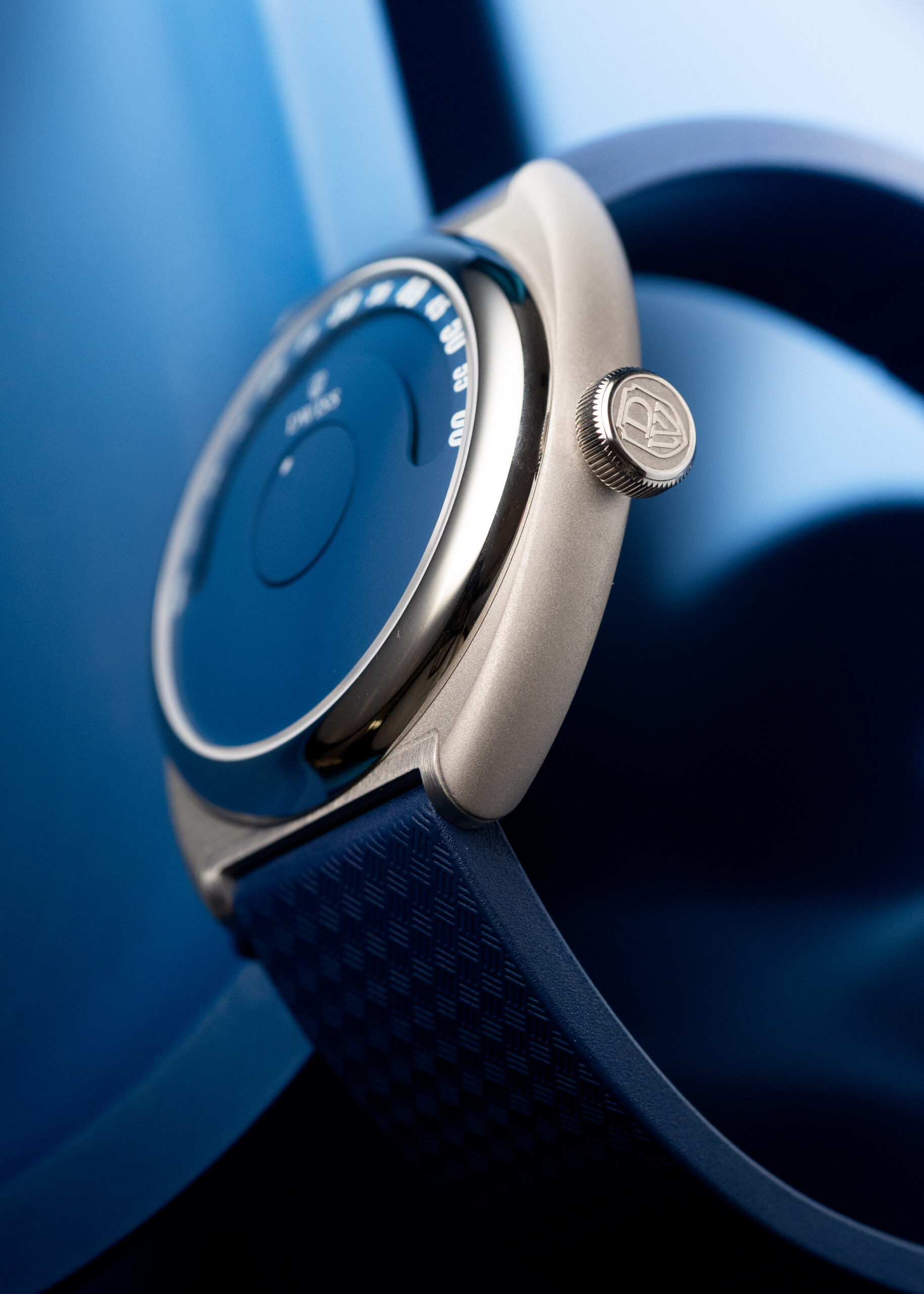
The S1 debuts a new cushion-shaped case in Swiss Made 316L stainless steel. It measures 40 millimetres in diameter, 44 millimetres lug-to-lug, and 13.8 millimetres thick. Those numbers are well judged. The short lug-to-lug means it hugs the wrist and suits a wide range of sizes, and while 13.8 millimetres is not slim, much of that height comes from the double-domed sapphire crystal, which curves away at the edges and keeps the profile softer than the figure suggests.
The finishing is deliberate. The case is sand blasted, giving it a soft, matte, almost tool-like texture, while the lugs are brushed to catch the light along the flanks. That contrast suits the S1 well; the case stays quiet so the dial can do the talking, and the matte surface works especially well against saturated colours like orange and green. The crystal carries an anti-reflective coating, which matters on a watch where so much of the experience is watching the discs move beneath it.
Water resistance is 10 ATM, or 100 metres, which is more than enough for daily life, swimming, and the occasional overenthusiastic hand wash. This is a watch you can actually wear, not one that lives in a box waiting for a special occasion. Which brings us to the engine.
La Joux-Perret Under the Hood
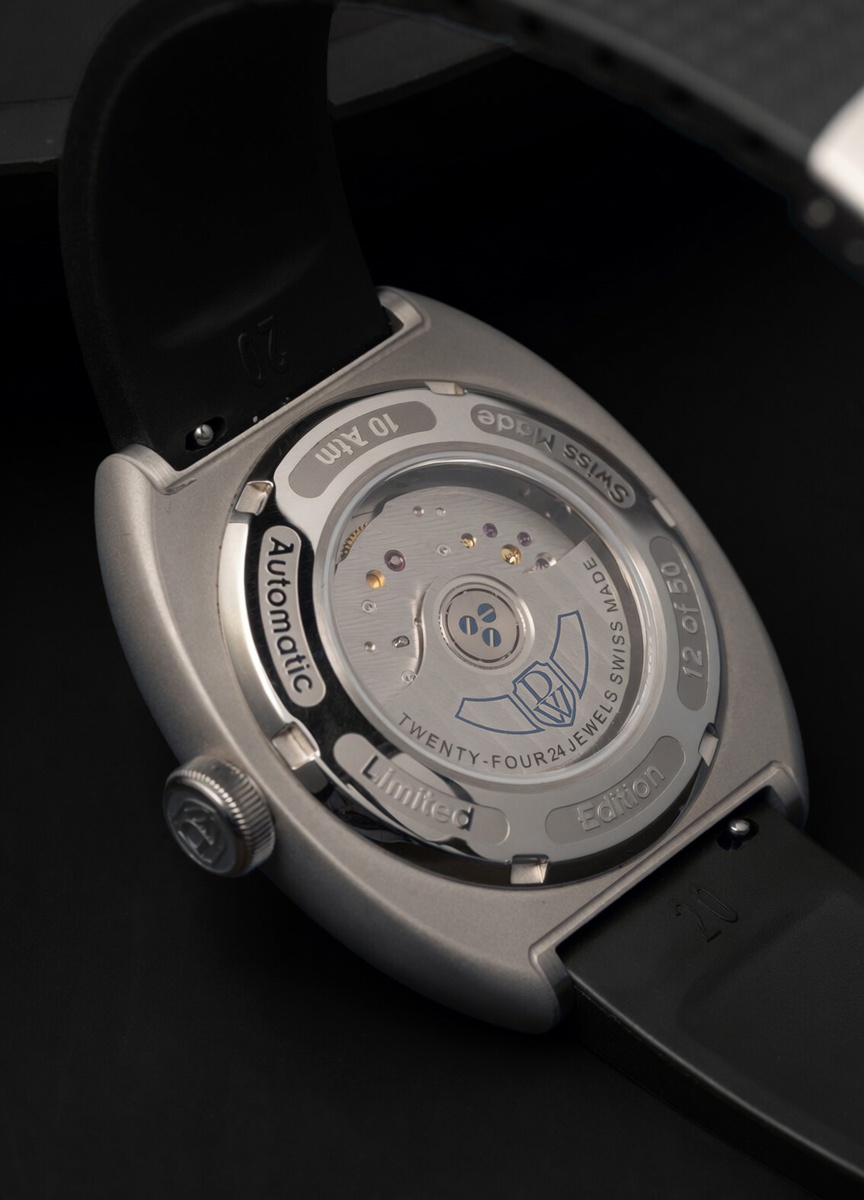
Powering the S1 is a modified La Joux-Perret G100 Soigné automatic calibre. The G100 has become a quiet favourite among serious Swiss microbrands; it is the same base we saw in the Furlan Marri Outback Songlines, and for good reason. It runs at 28,800 vph (4Hz) on 24 jewels and offers a 68-hour power reserve, so you can take the watch off on Friday evening and find it still running on Monday morning.
The modification is the key part here. DWISS has adapted the movement to drive the satellite discs of the wandering hours display, which is a meaningfully more complex job than turning a pair of hands. The see-through caseback lets you look at the G100 at work, and it is a nice reminder that the creativity on the dial is backed by proper Swiss mechanics underneath.
Straps and Everyday Comfort
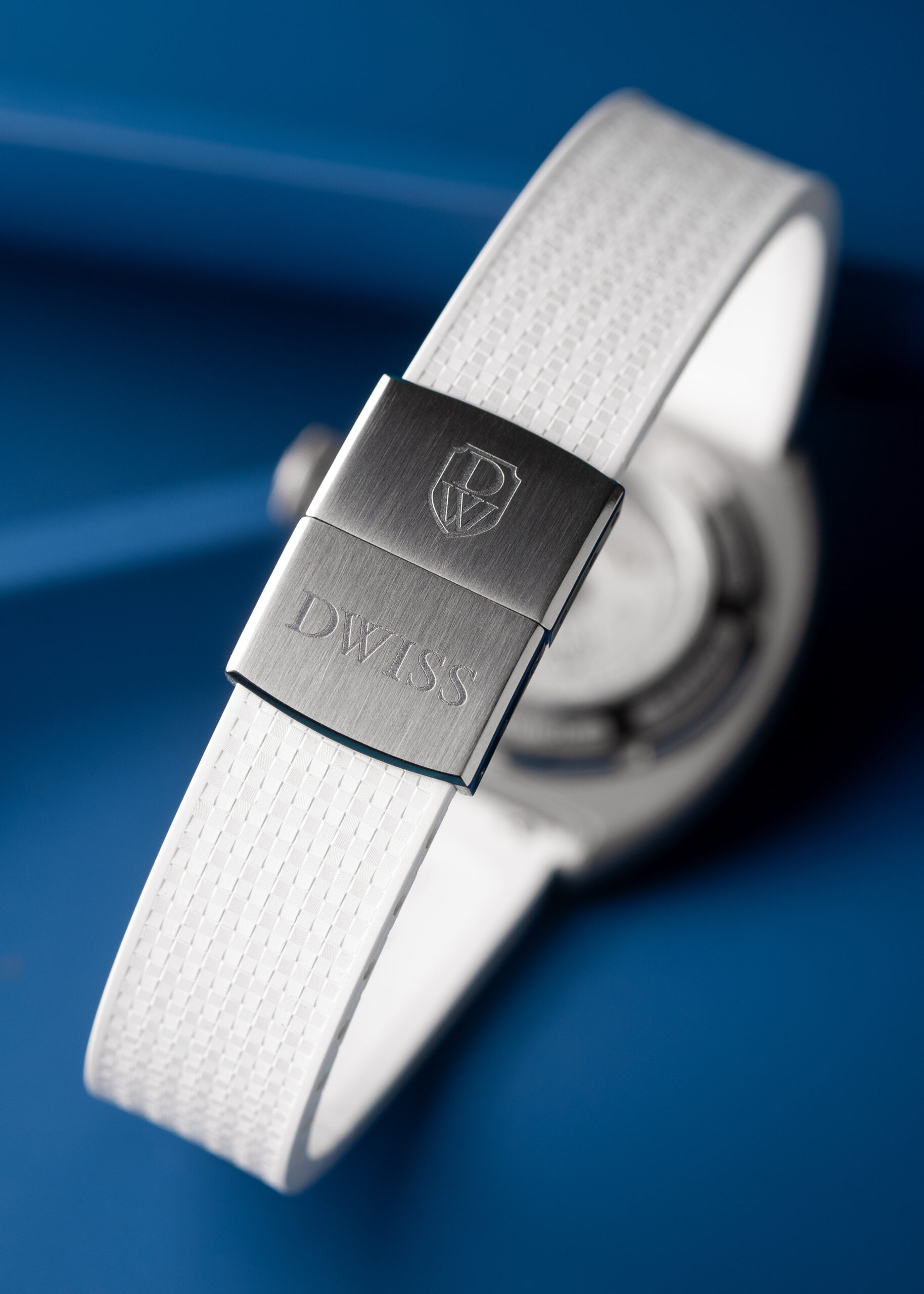
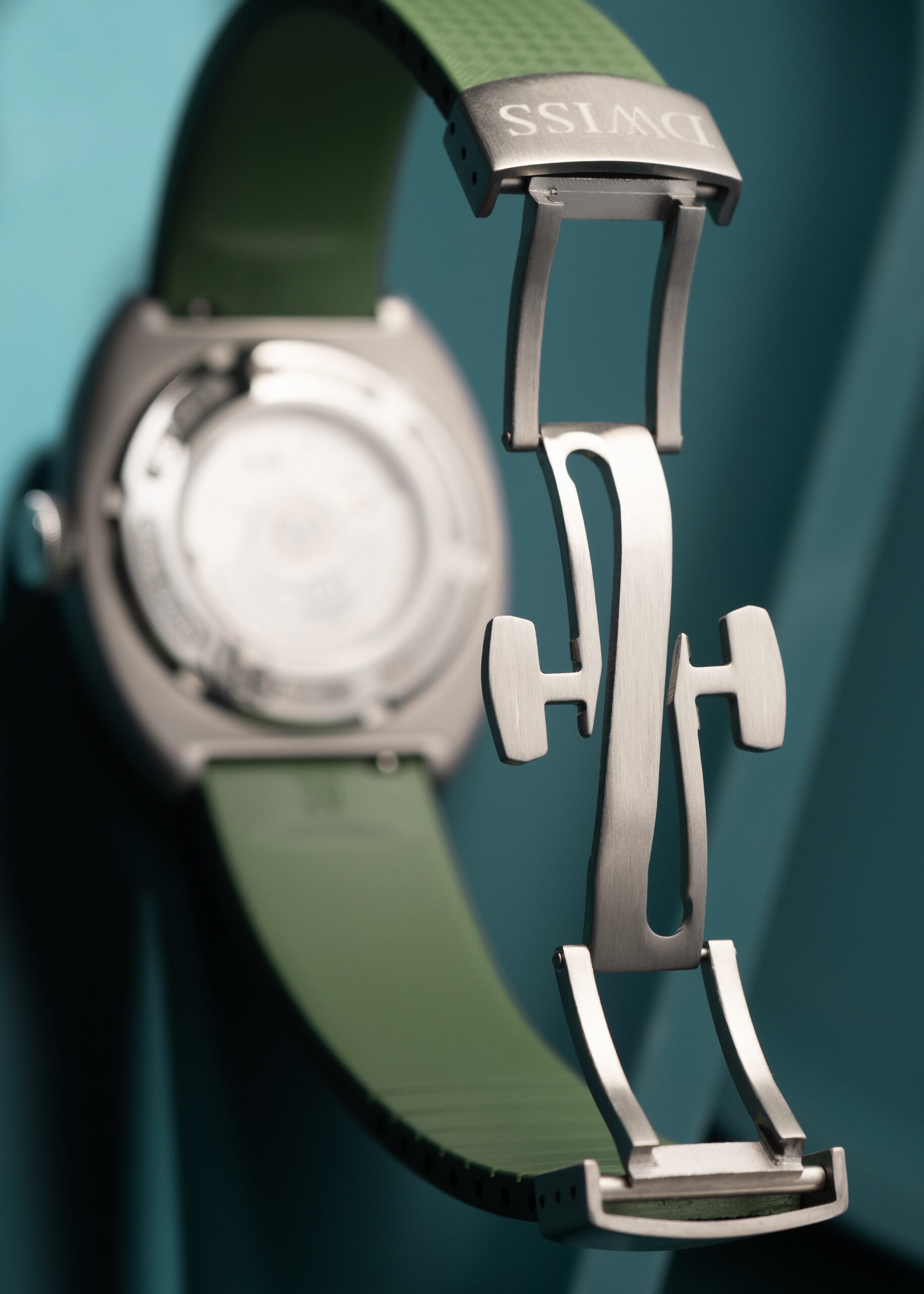
Each S1 ships on a Delugs CTS (Cut to Size) FKM rubber strap, closed with a 316L stainless steel butterfly clasp. FKM is the premium end of rubber, more resistant to dust, sweat, and heat than standard silicone, and the cut-to-size format means you trim the strap to your exact wrist rather than fighting a row of holes.
In practice, the straps are extremely comfortable. They are soft and supple from day one, and together with the cushion case and short lugs, the S1 sits close and secure on the wrist. The butterfly clasp also keeps the strap from wearing unevenly over time, which is a small detail I appreciate on a watch I would want to wear often. Comfort like this turns a statement piece into a genuine daily wearer.
Why It’s Special
The S1 is one of those rare releases where design ambition, mechanical substance, and value land in the same place. It brings a complication usually associated with far more expensive brands into a microbrand price bracket without feeling like a compromise.
- Wandering Hours, Done Accessibly: Wandering hours displays are traditionally the territory of high horology houses priced well beyond most collectors. The S1 delivers the concept with its own twin satellite disc layout and central seconds disc at $2,829 / €2,512.95.
- Colour With Real Quality: Six vivid dials, each matched to a strap, executed to a level that makes bright colours feel premium rather than playful. The orange fumé is the standout.
- Swiss Mechanics You Can Trust: A modified La Joux-Perret G100 Soigné with 68 hours of power reserve puts the S1 on the same mechanical footing as other respected Swiss independents using the same base.
- Genuinely Limited: With only 50 pieces per colour, each S1 variant is a small run, which keeps the watch exclusive without resorting to artificial hype.
- Built to Be Worn: A 40 millimetre cushion case, 44 millimetre lug-to-lug, 100 metres of water resistance, and comfortable FKM straps make this a statement watch you can wear every day.
A Wandering Hours Watch for the Rest of Us
The DWISS S1 Wandering Hours is exactly what I hoped a DWISS would be in the metal: thoughtful, characterful, and very well put together. It is built for the collector who already owns the classics and wants something that makes them smile every time they read the time, without giving up wearability or Swiss mechanical credibility.
At $2,829 / €2,512.95, the value proposition is serious. A modified La Joux-Perret calibre, a new cushion case, a double-domed sapphire crystal, and a complication you rarely see at this level add up to a spec-to-price ratio that is hard to argue with. DWISS is the kind of brand that shows what the microbrand space can achieve when design leads the way.
With only 50 pieces per colour, the real challenge is not deciding whether you want one. It is deciding which orbit you want to live in (I have already made my choice, and it is orange).
Specifications
- Brand: DWISS
- Model: S1 Wandering Hours (S1 Blue, S1 Green, S1 Salmon, S1 Black, S1 Orange, S1 Silver, plus S1 Orange on black strap and S1 Silver on white strap)
- Case Material: Swiss Made 316L stainless steel, sand blasted with brushed lugs, cushion shape, DWISS monogram engraved crown
- Case Dimensions: 40mm diameter, 13.8mm thickness, 44mm lug-to-lug
- Water Resistance: 10 ATM (100m)
- Strap: CTS (Cut to Size) FKM rubber strap by Delugs, colour matched per variant, 316L stainless steel butterfly clasp
- Crystal: Double-domed sapphire with anti-reflective coating; see-through caseback
- Movement: Modified La Joux-Perret G100 Soigné, automatic, 24 jewels, 28,800 vph (4Hz), wandering hours with satellite discs and central seconds disc
- Power Reserve: 68 hours
- Limited Edition: Yes, 50 individually numbered pieces per colour, never re-issued
- Price: From $2,829 / €2,512.95 (CHF 2,200 to CHF 2,300 on the DWISS site, depending on colour)
More information about this exact watch model on DWISS.
Image Gallery
About DWISS S1 Wandering Hours: Key Questions Answered
How does the wandering hours display on the DWISS S1 work?
Instead of a conventional hour hand, two satellite discs carry the hours, one for the odd hours and one for the even hours. The current hour travels across the upper half of the dial along a minute scale, so its position on that arc tells you the minutes. A central disc handles the running seconds.
What movement is inside the DWISS S1 Wandering Hours?
DWISS uses a modified La Joux-Perret G100 Soigné automatic calibre. It runs at 28,800 vph (4Hz) on 24 jewels and offers a 68-hour power reserve, which you can watch through the see-through caseback.
How many DWISS S1 watches are made and how much do they cost?
Each colour of the S1 is limited to 50 pieces. The collection currently spans blue, green, salmon, black, orange, and silver dials, and pricing starts at $2,829 / €2,512.95, with the orange and silver versions sitting slightly higher on the DWISS site.
Top Lists
- anOrdain, Baltic, Elka, Furlan Marri, Havaan Tuvali, HEINRICH Watches, Laco, Ophion, Vario
- By Dan H.
- Astor & Banks, Baltic, Havaan Tuvali, Laco, MD Watches, STERNGLAS, Vario
- By Dan H.